PASQAL - COMPUTE & CLOUD
Making quantum hardware accessible through a transparent cloud platform
Introduction
Making quantum hardware accessible through a reliable public cloud
Pasqal builds neutral-atom quantum processors (QPUs) that rank among the most advanced and scalable in the world. Researchers, students, startups, and enterprises need a reliable, public cloud platform to access these QPUs, submit and monitor workloads, and gain real-time visibility into job execution and processor status.
When I joined as Pasqal’s founding (and sole) product designer in 2023, the cloud platform was invitation-only, opaque, and incomplete. Over the following two years, I led its transformation into a mature, fully public product now used daily to run and manage real workloads on 100+ qubit machines. The platform serves as the central gateway to Pasqal’s quantum ecosystem, with supporting tools digital tools like Pulser Studio and unified documentation complimenting the
The Challenge
Turning an invisible and fragmented cloud platform usable and trustworthy
The cloud platform was invisible to the outside world: no public landing page, no pricing transparency, and no onboarding path. Once inside, foundational elements were missing, whether it was entire pages or core features, the cloud had no dashboard, no dedicated devices catalogue, no clear processor status or history views and locating past jobs or batches required significant effort and insider knowledge. Available information was extremely sparse, leaving even expert users frustrated and repeatedly requesting basic visibility and controls.
On top of that, there was no unified documentation portal; all documentation lived scattered across standalone platforms, and most users were completely unaware that Pulser Studio and the supporting quantum libraries even existed.
In short, the entire digital ecosystem felt immature, incomplete, and almost invisible, this demanded building entire products, pages and features from scratch as well as numerous incremental improvements to become production-ready.
Role & Team
Designing, scaling, and shipping as the sole product designer
As the only product designer at Pasqal, I own the full end-to-end design process for the cloud platform: research, information architecture, interaction and visual design, design systems, analytics and QA reports, detailed specs, and engineering hand-off. I collaborate often with product managers, software engineers, physicists, VP of Product, customer success managers, and occasionally the marketing team.

MY APPROACH
Grounding decisions in direct user interviews and continuous feedback
Research & Discovery
Design
Implementation
Monitoring & Iteration
Overcoming Obstacles
Balancing speed, scope, and clarity across multiple platforms
I was responsible for four different digital products at once: the cloud platform, Pulser Studio, the Documentation and Community platforms. Most companies have one designer per product; I had four. That meant I constantly had to choose what to work on next, weighing user needs, urgency, technical feasibility, and business priorities.
Another big challenge early on was that designs were changing too frequently for the engineering teams. Developers would start coding a feature and shortly after the mockup would change because one user requests or product decisions came in. To stop the rework, I worked with the dev teams to reorganise our Figma setup: every page now has a living “Final” version where I keep iterating and a separate “Sprint” copy that is frozen once engineering starts implementation. I also added clear status banners and simple versioning directly in the files so that everyone, from engineers to leadership can see at a glance what is Ready for Dev, In Development, In Progress, In Review, or Done. That small structure removed almost all back-and-forth and let us ship much faster.
Close, daily collaboration with engineering, product managers and other stakeholders was what ultimately made everything possible.
Solution
A transparent, public cloud platform built for real quantum workloads
An immense effort went into aligning Pasqal Cloud with user needs and business goals. We opened the platform publicly, created an onboarding flow for novices, and established it as the clear entry point to Pasqal’s quantum ecosystem.
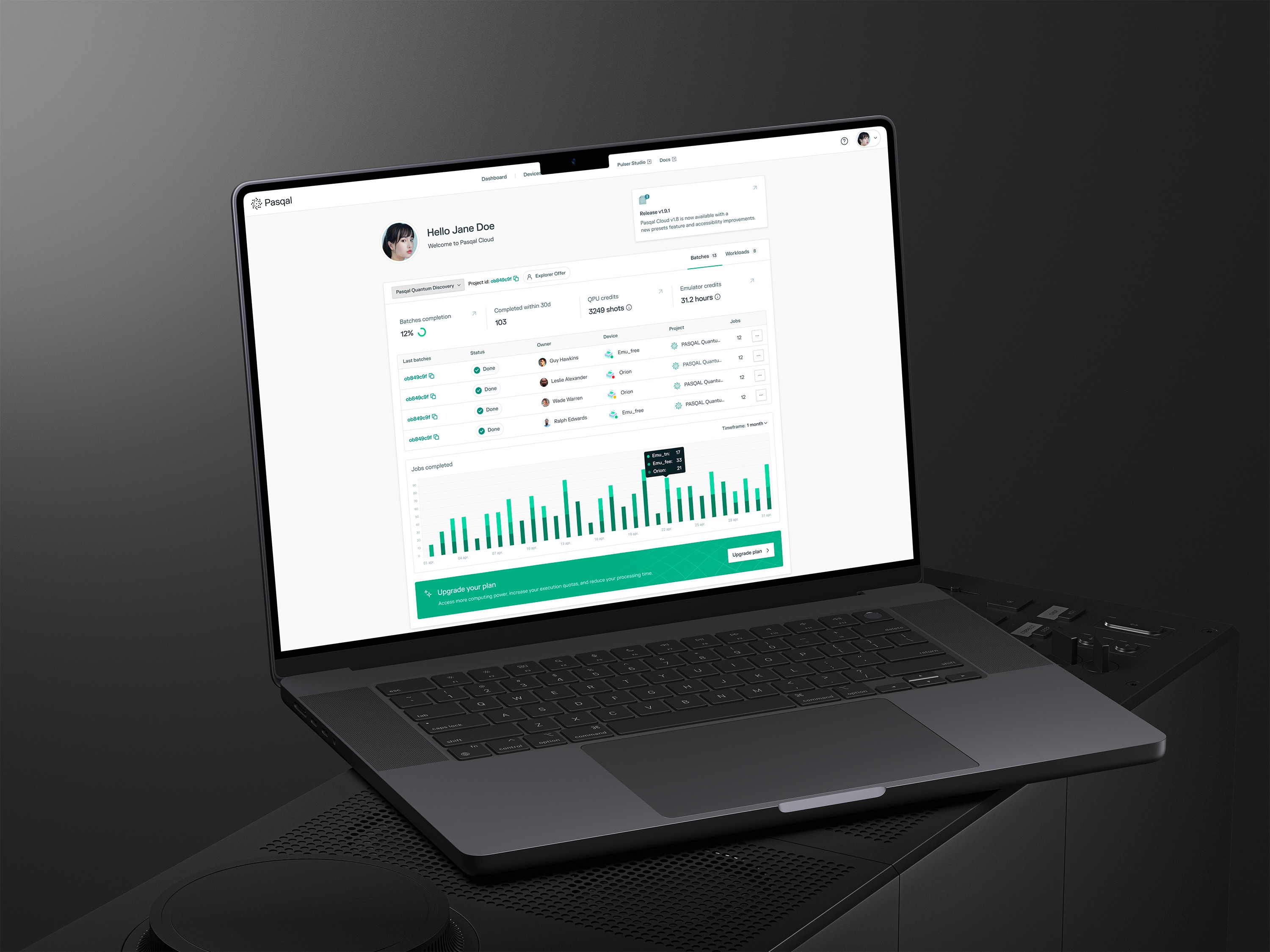
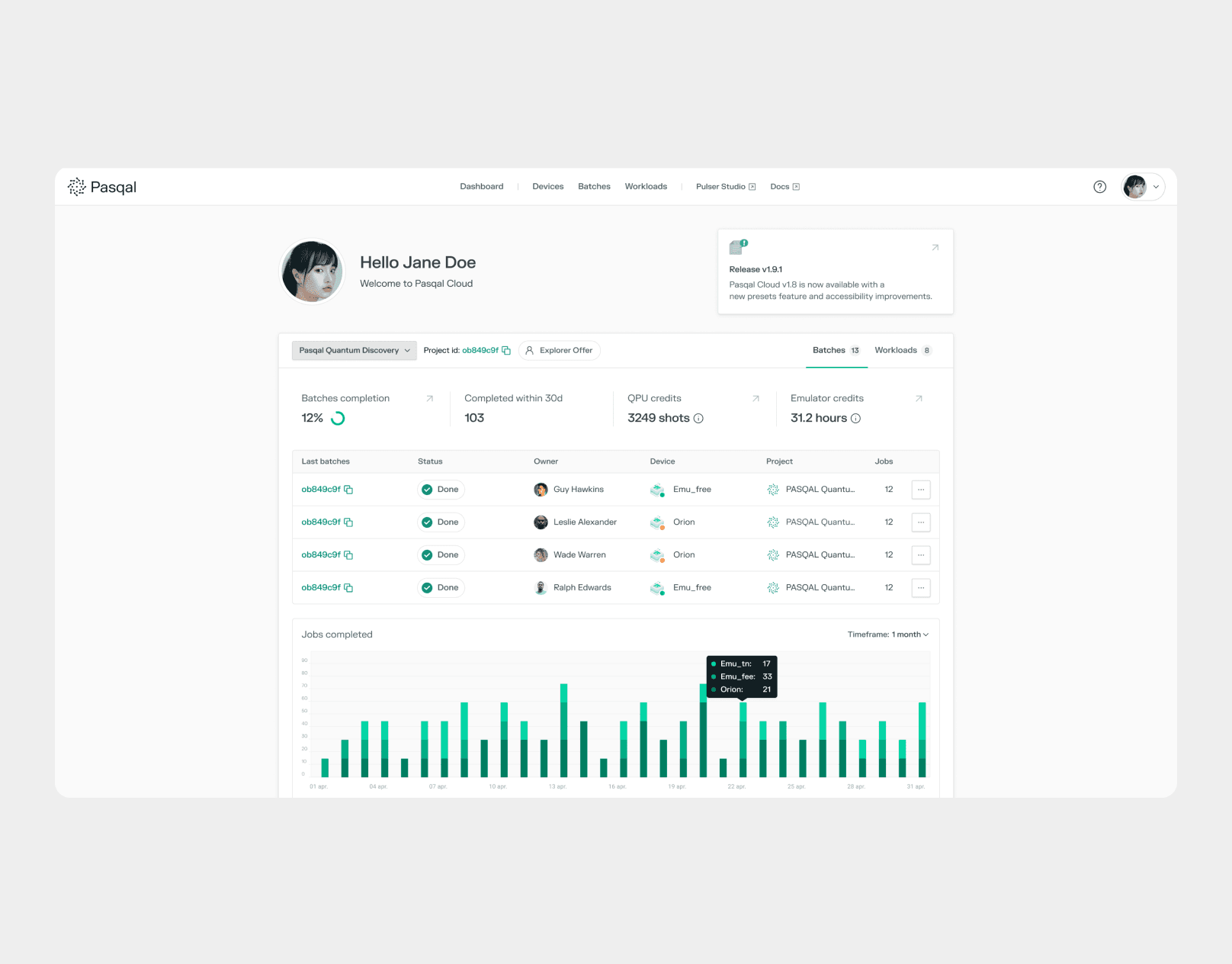
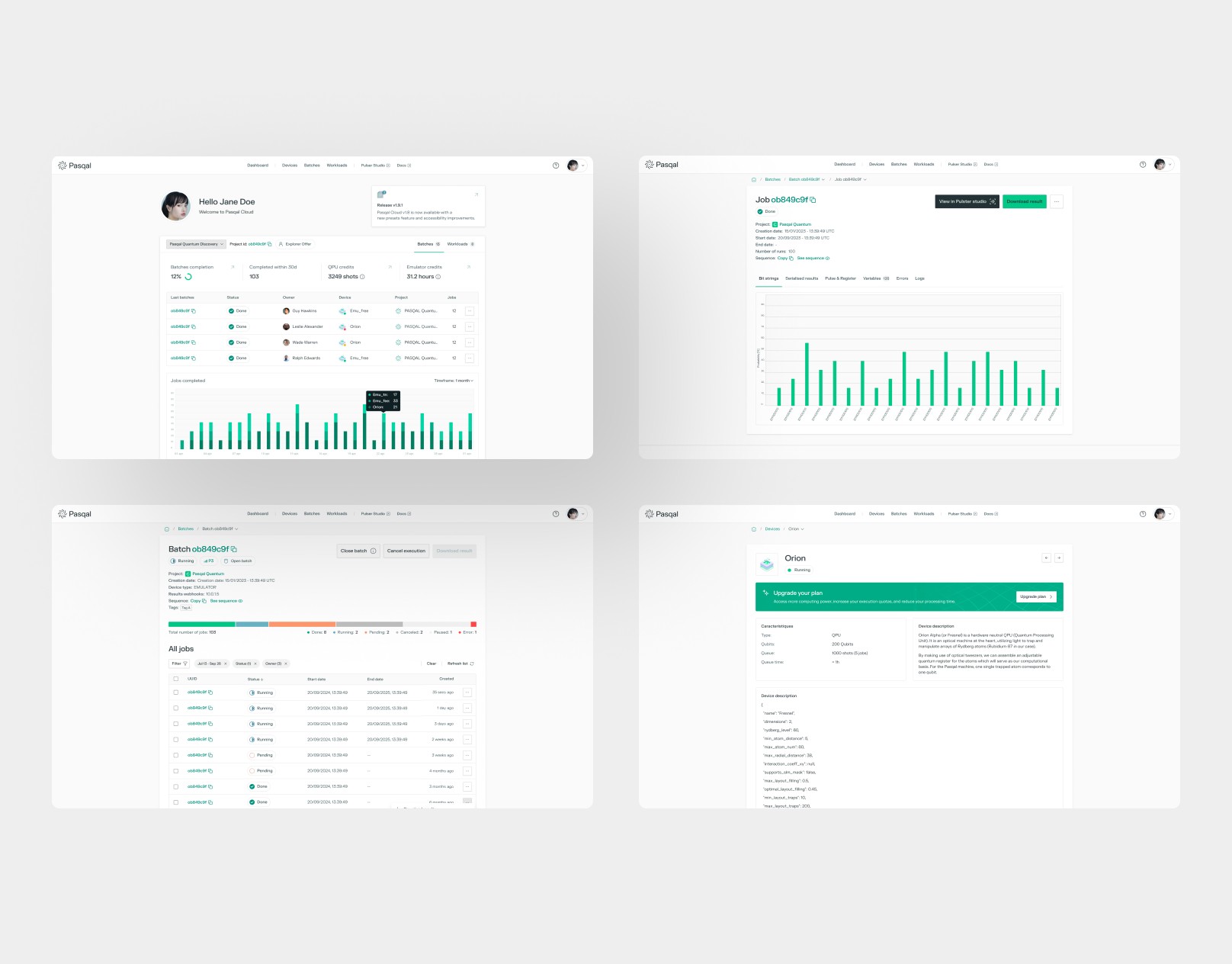
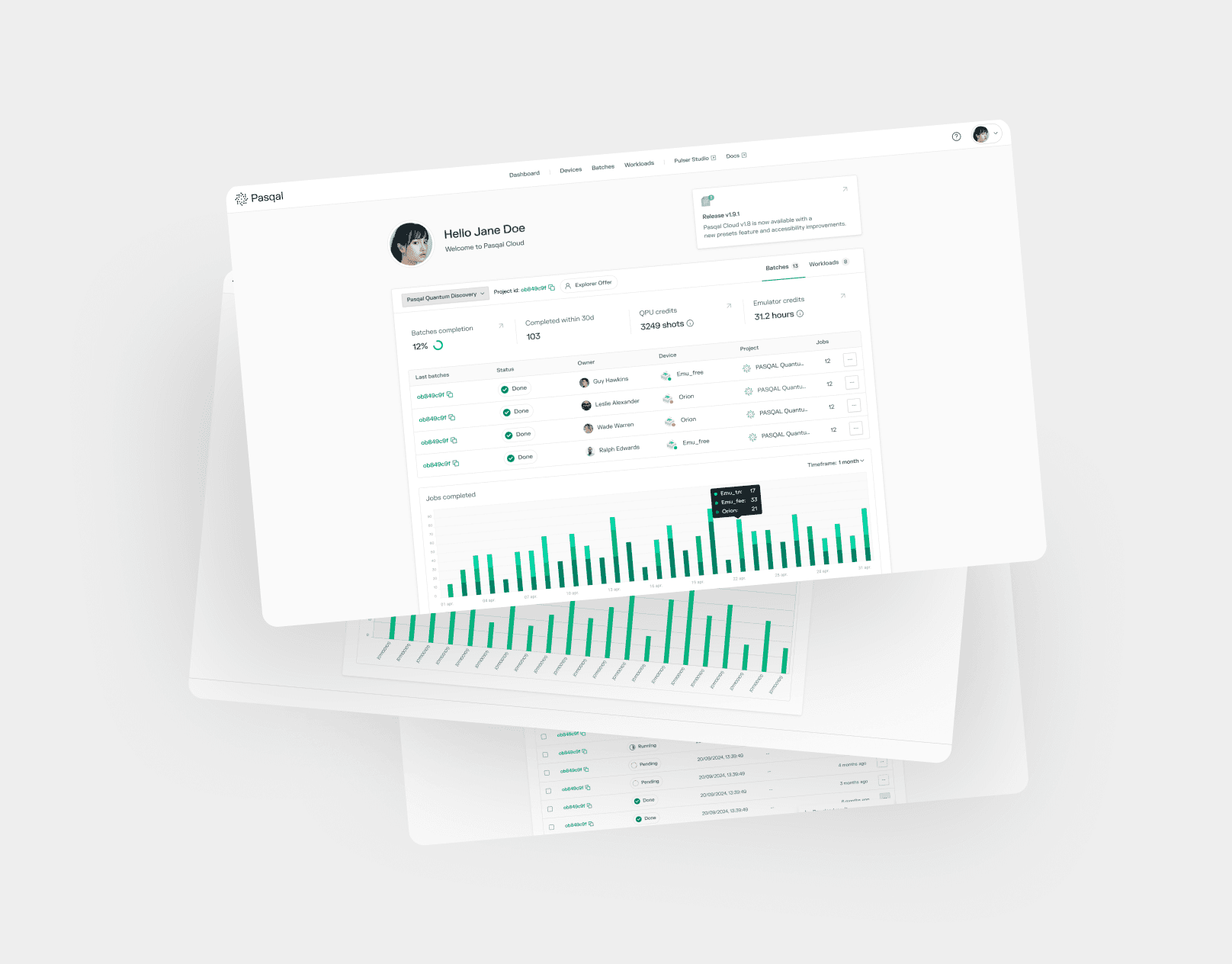
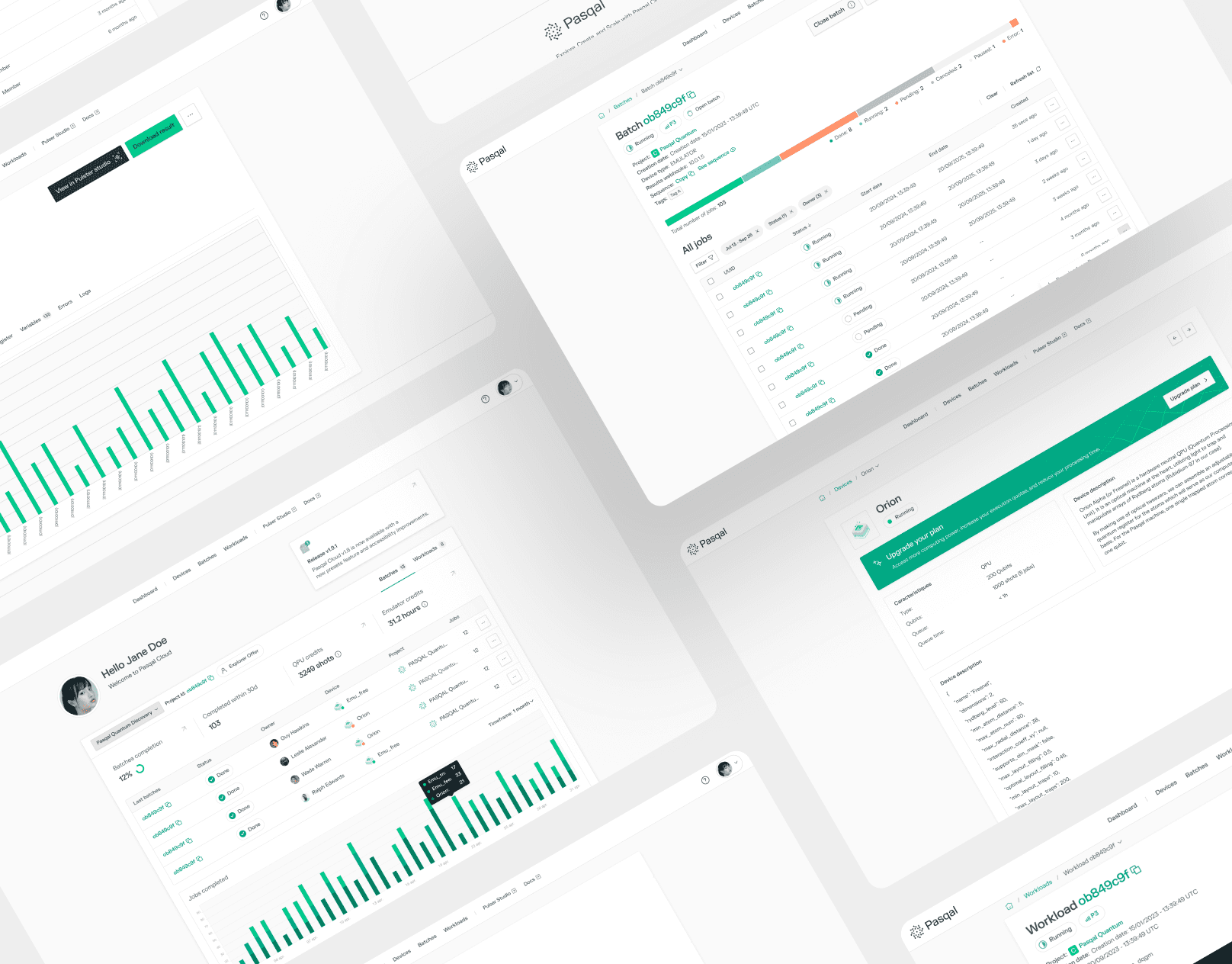
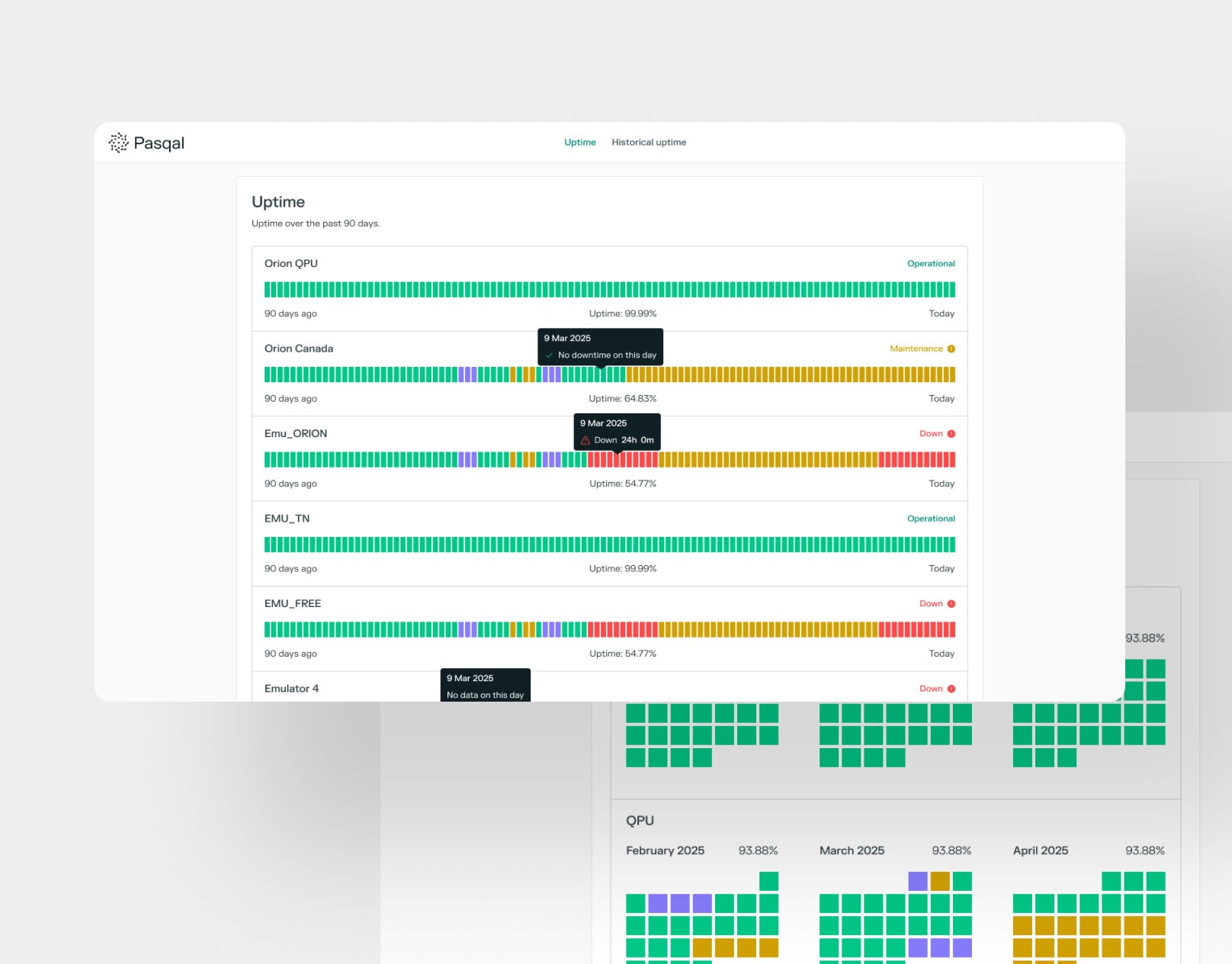
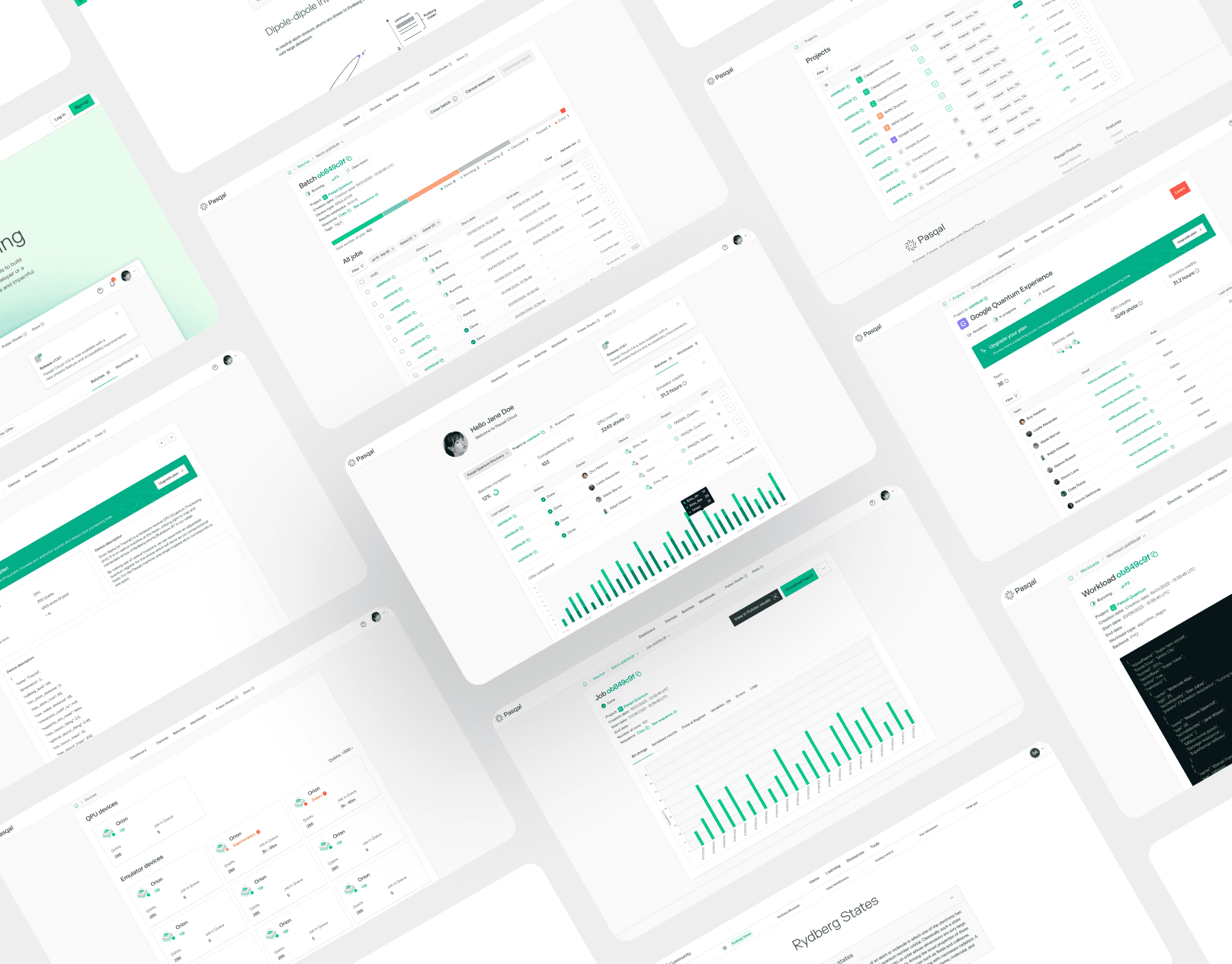
The macro overhaul delivered new foundational surfaces: a public landing page, an Offers & Pricing page (now directly referenced in enterprise contracts), a real-time Dashboard, a comprehensive Devices catalogue, and a live Device Status timeline with future maintenance scheduling. These changes transformed discoverability, trust and overall usability.
We also added workflow-critical features: bulk actions on jobs/batches/workloads, instant priority and status indicators, dynamic tables with exports, quota visibility, dark mode, and consistent navigation. The platform is now genuinely user-friendly, scales from students to enterprise teams, and provides fast, reliable control over quantum experiments.
Results
Measurable growth in users, contracts, and platform trust
The transformation of Pasqal Cloud has delivered strong, measurable impact across adoption, revenue, user satisfaction, and global expansion.
The platform scaled from a handful of invited research labs to hundreds of active users and multiple signed commercial contracts. Basic suppor enquiries and tickets for basic questions such as job status, processor availability, or quota have diminished thanks to the new transparency and self-service features.
Key business and adoption highlights include:
+€17 million in revenue generated through cloud contracts in 2024
A university purchased €20,000 worth of QPU hours in just a few days after public launch and streamlined onboarding
Expanded availability through major third-party marketplaces: Google Cloud Marketplace, Scaleway, OVHcloud, and Microsoft Azure
Rapid geographic growth with the first QPU ever deployed in the Middle East (in Saudi Arabia) with a dedicated cloud instance launched there as well as one in Canada for North American clients, driving exponential overall cloud usage
The implementation of analytics-driven iteration cycle I established using Microsoft Clarity, Looker Studio, and continuous user feedback keeps the product evolving sprint after sprint.
RELEFECTIONS
Lessons from scaling a complex product alone
Designing Pasqal Cloud taught me that excellence comes by doing the right things consistently. With a single well-structured design system, real usage analytics, and continuous user engagement, it’s possible to make outsized progress on even the most complex platforms. Rather than relying on large teams, I leaned on data, feedback loops, and tight alignment with engineering and product teams to drive decisions that mattered most.
In infrastructure and technical products, clarity and predictability build trust. Users care less about beauty and more about understanding what’s happening with their jobs and hardware.
Also knowing when and what to prioritise is key 🗝️