PASQAL - COMMUNITY PLATFORm
Building a community of quantum enthusiasts
Introduction
Creating Pasqal’s first community hub designed to turn curiosity into engagement
The Challenge
Transforming a complex scientific domain into an experience users actually want to return to
The ambition was to create an ecosystem where individuals, whether they're researchers, professionals or enthusiasts could explore quantum computing, interact with peers and have the possibility of running their own experiments on real quantum hardware.
However, building a community is not simply about launching a platform; it requires fostering an active, engaged user base. A successful community needs compelling content, incentives for participation and a reason for people to remain engaged over time.
Role & Team
Leading the end-to-end design of the platform, while coordinating with physicists, engineers and agencies
I handled the entire design scope of the project. This included research, information architecture, full UI design, and coordination with both internal and external teams. I worked closely with physicists and mathematicians who wrote the educational content, collaborated daily with engineering and product leadership and supervised two external designers. I also managed our partnership with an external agency Cartoonbase who helped us create the 3D learning experience of the community platform.
MY APPROACH
A flexible design approach shaped by constraints, rebrands, and product needs
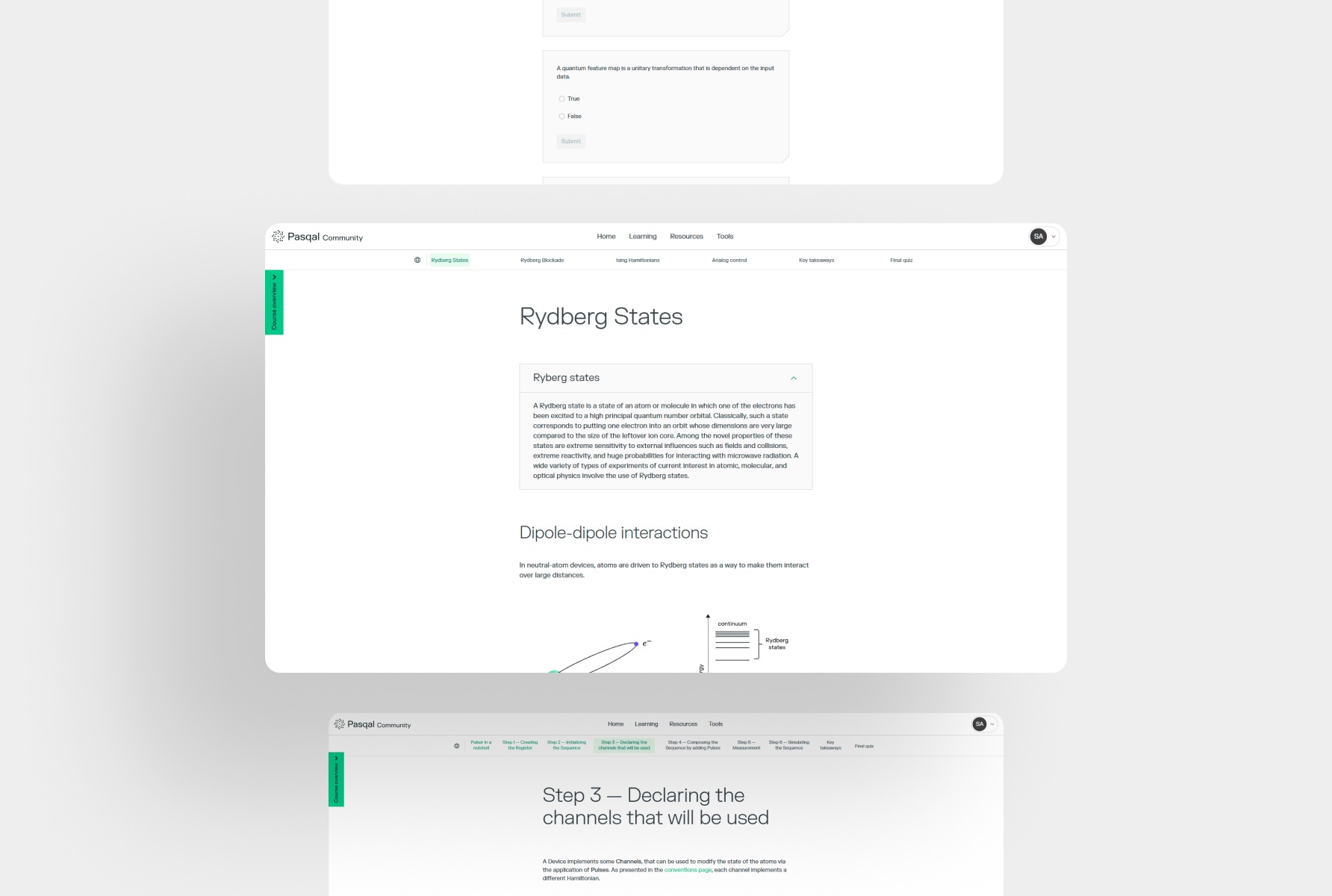
I started with targeted research by benchmarking platforms and interviewing researchers and engineers, this revealed the need for more immersive quantum education. Following this was the design of interactive learning courses "Quantum Quest". We rapidly tested, iterated on it with standardized lesson templates and refreshed visuals and implemented by extending Pasqal’s design system and supervising custom illustrations for a cohesive final community platform.
Research
Design
Testing & Iteration
Implementation
Overcoming Obstacles
Managing Rebrands, Redesigns, and Technical Roadblocks
One of the major pivots occurred when we realized that the structure of lessons varied significantly across different learning verticals. This lack of consistency made it difficult for users to follow a structured learning path. I quickly identified this issue and proposed a standardized lesson format that ensured coherence across all lessons.
Additionally, Pasqal underwent a complete rebranding in February 2024, requiring me to update the existing design system before we could fully proceed with the design of the Community Platform. We also realized that initial deliveries and concepts we had implemented ressembled too much the brand of one of our direct competitors, so we decided to postpone the launch in order to recreate some design materials (3D Worlds, illustrations, videos).
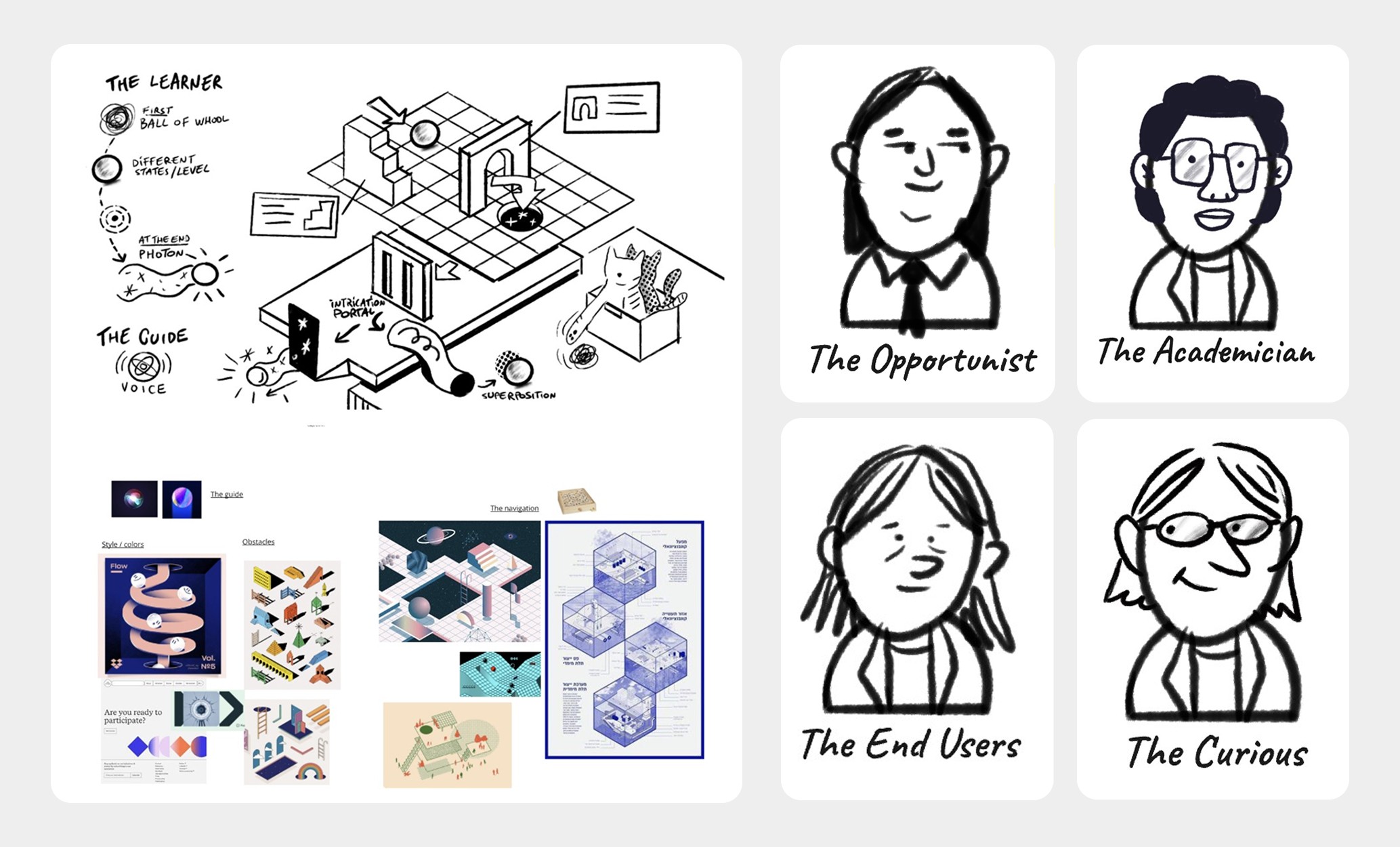
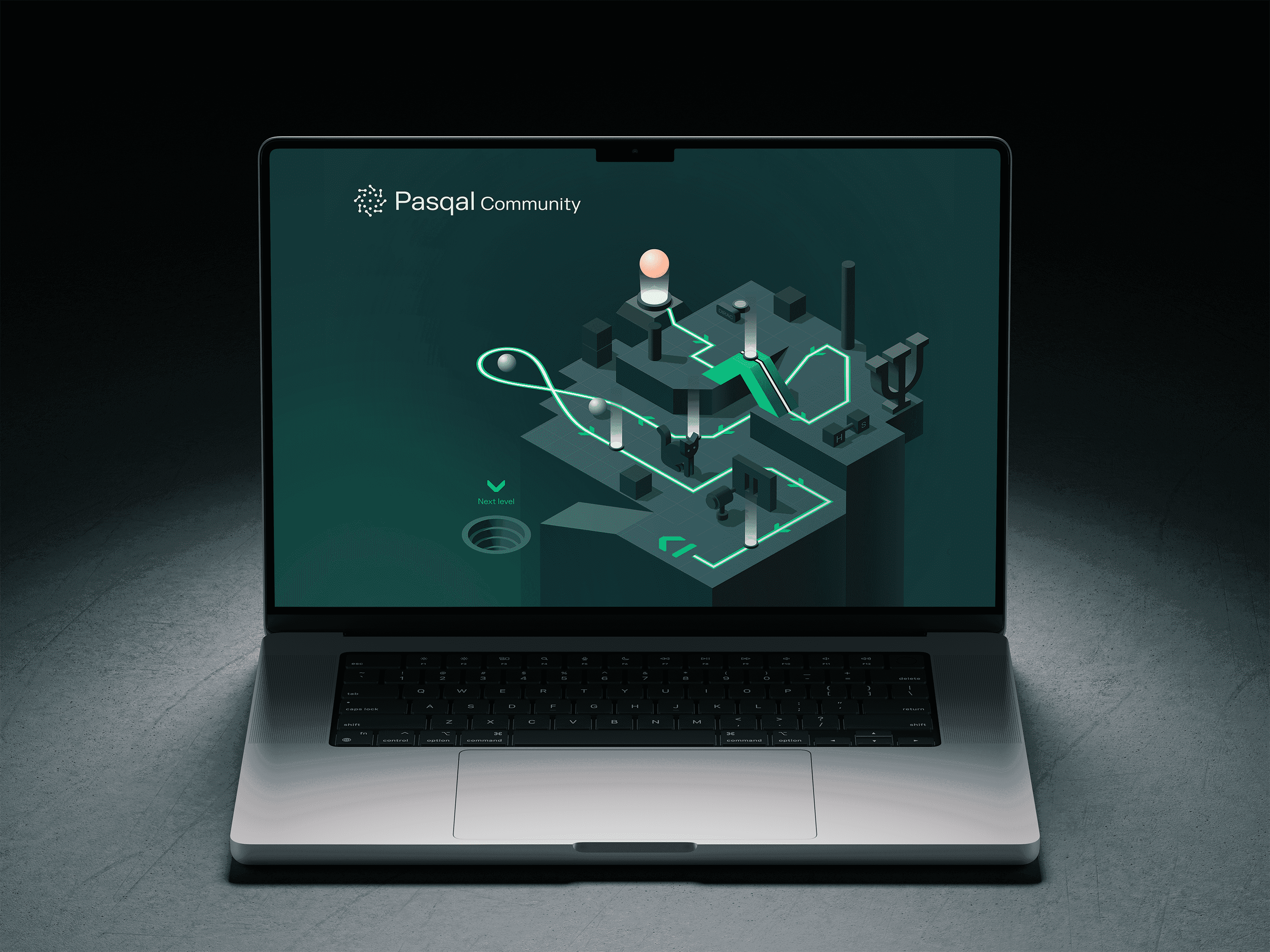
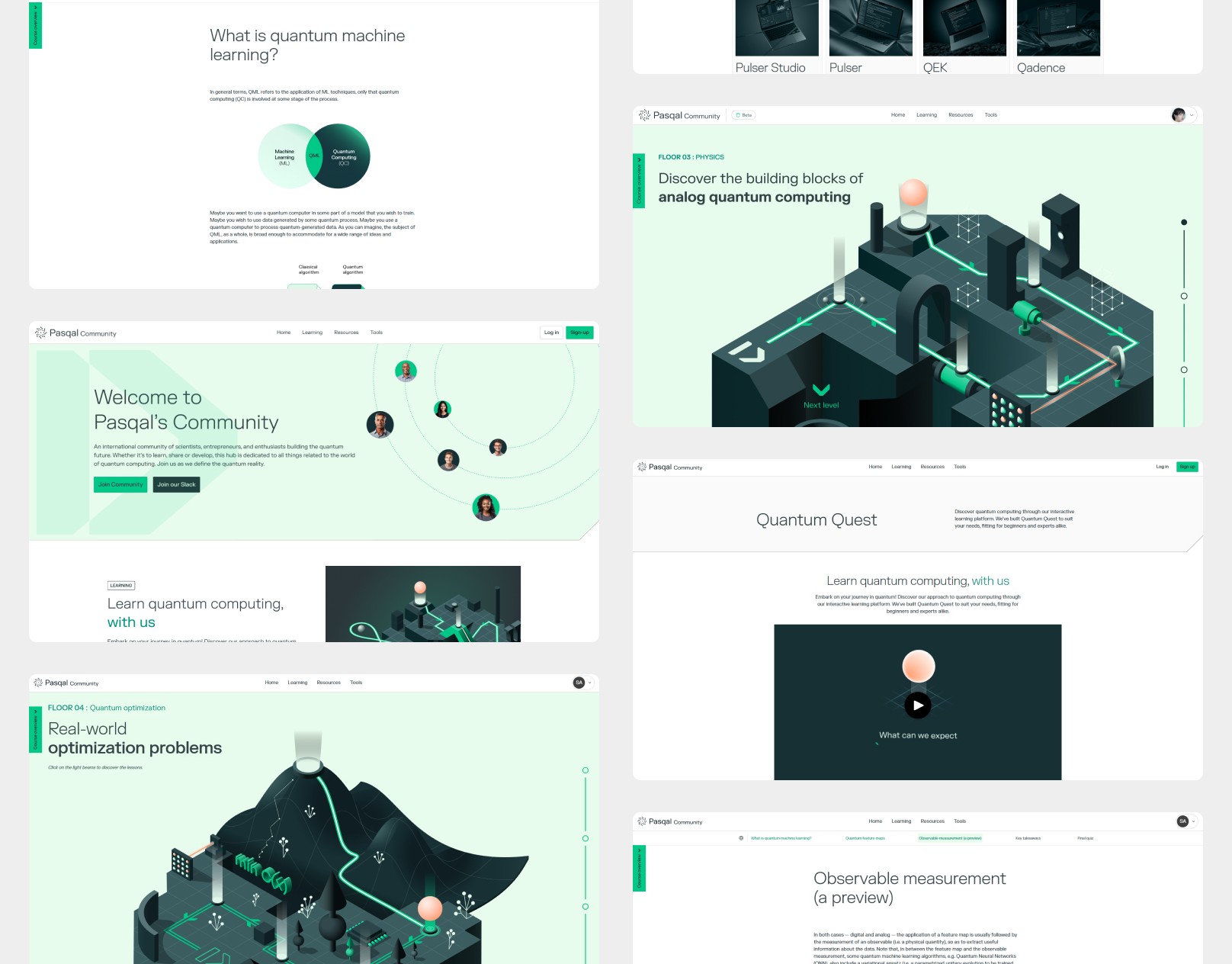
Image of the First level of the Quantum Quest learning experience, each light beam represents a lesson, on this quantum level there are six lessons. The user is an atom travelling through the quantum world, by clicking on a light beam he has an overview of the lesson and can enter it to begin learning. Should the user choose to go see other levels (by clicking the arrow on the left) he will need to dive deeper into the world of quantum!
Solution
A vibrant community, with a complete platform and immersive learning journey
The final platform is organised around four deeply integrated pillars, each reinforcing the others.
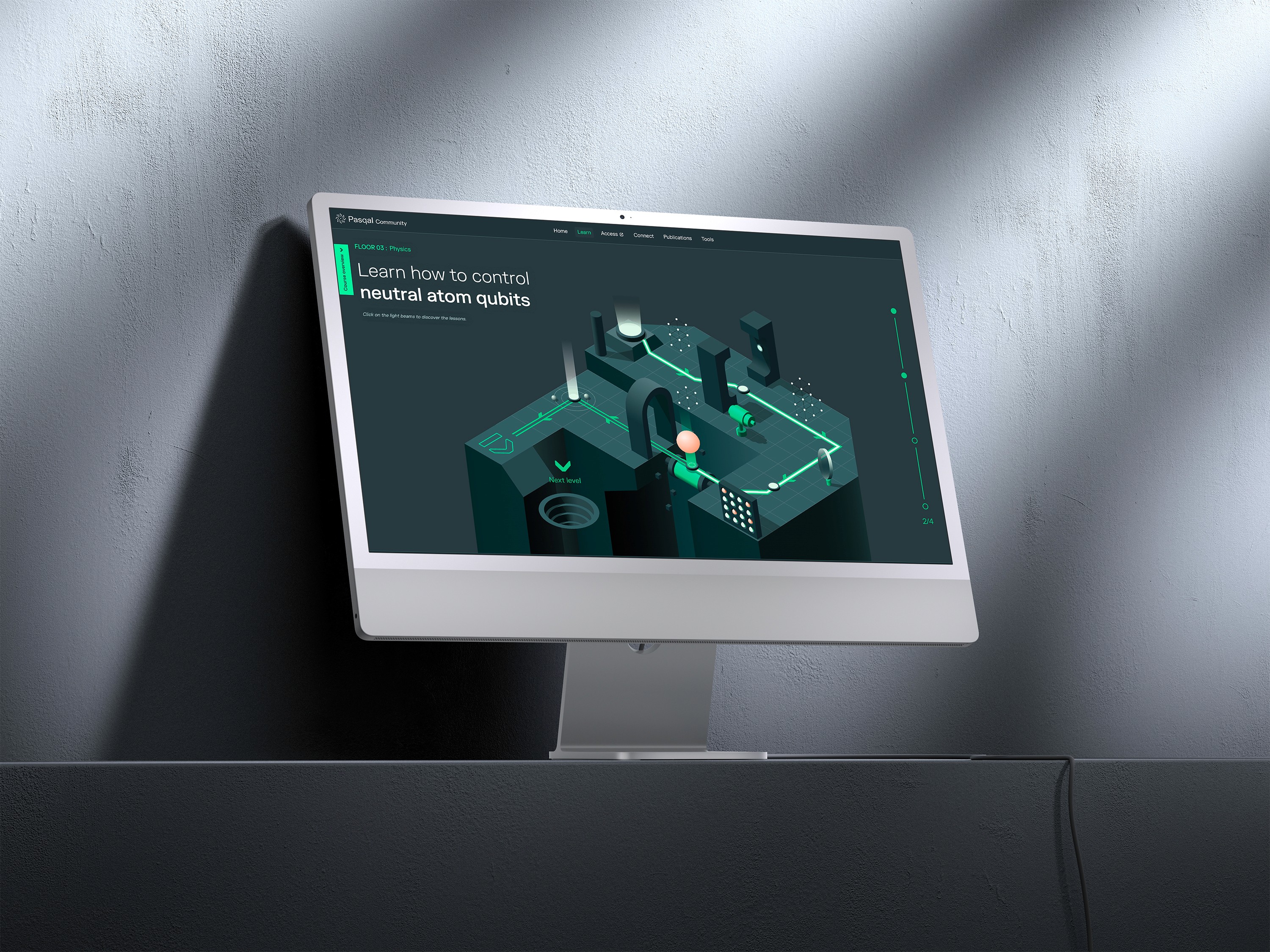
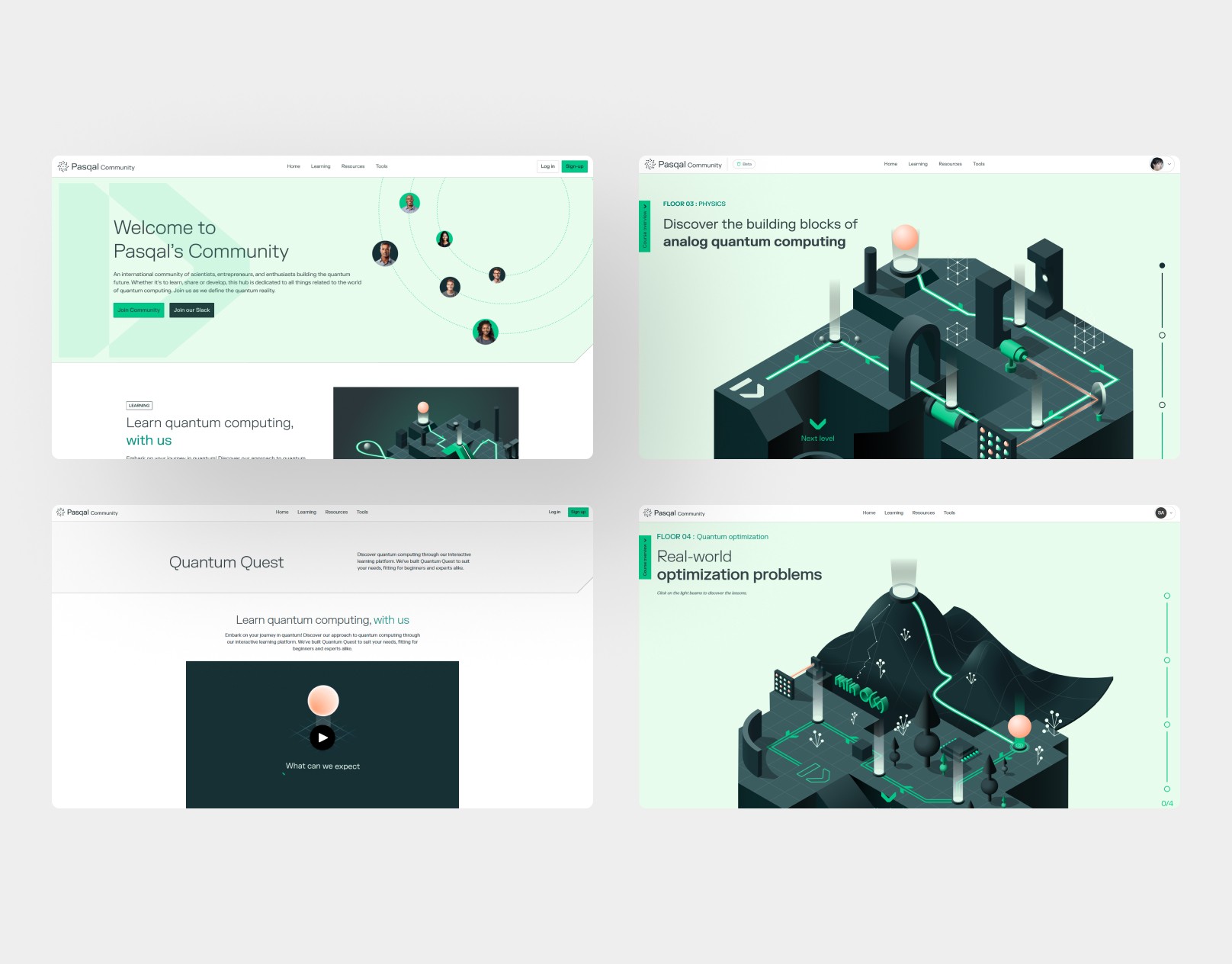
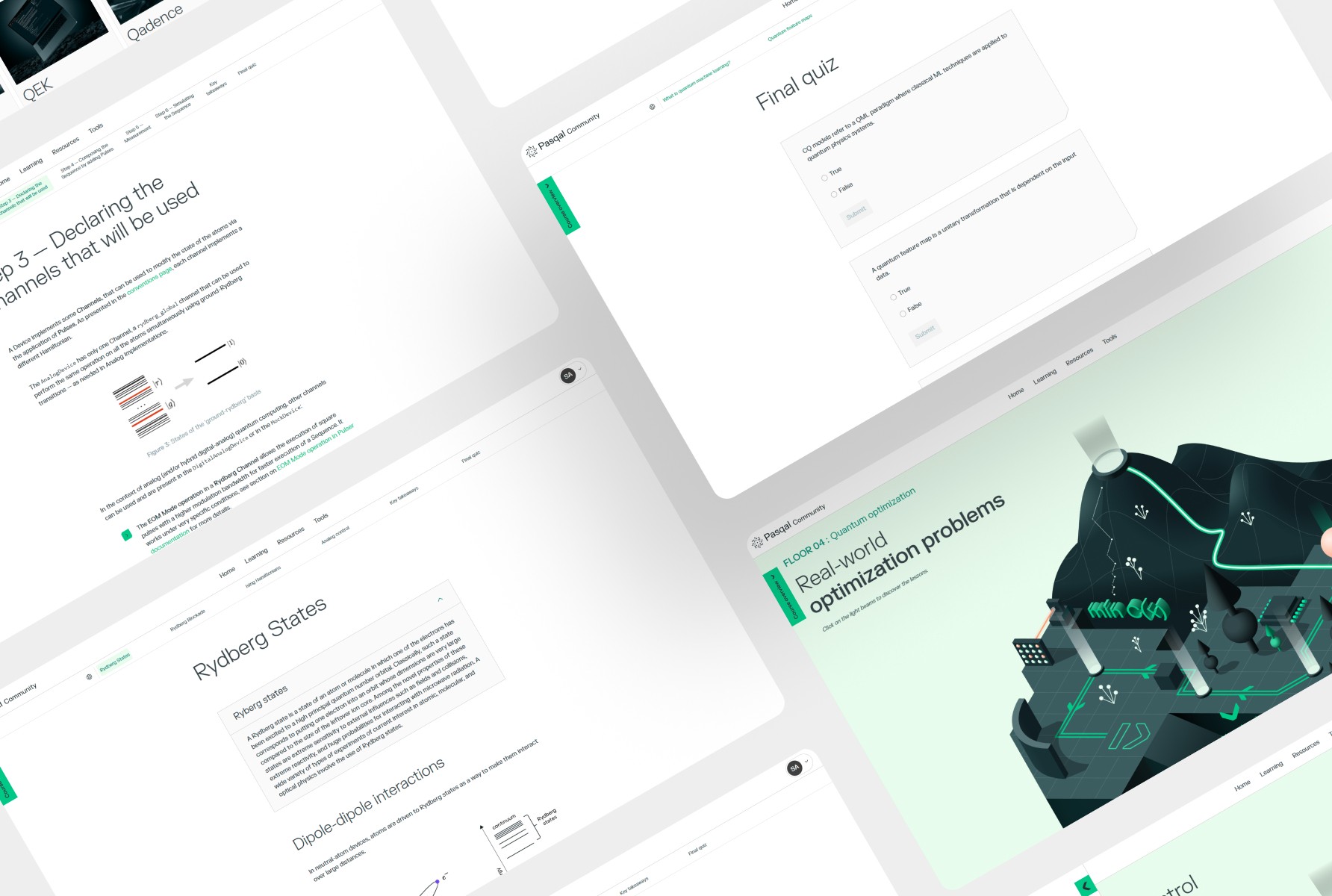
The Learning pillar is anchored by Quantum Quest, an immersive 3D environment where users descend through quantum worlds and unlock interactive lessons on everything from mathematics, qubits, superposition to neutral-atom control. The Access pillar offers quick requests to emulators and real QPUs, turning curiosity into actual hardware adoption. The Collaborate pillar showcases Pasqal’s open-source libraries, documentation and tools, inviting the community to help shape the ecosystem. Finally, the Connect pillar lists live events, webinars, and provides direct entry to the Pasqal Slack workspace.
Results & impact
A high-conversion community launch that rapidly validated demand and engagement
The community launched publicly in February 2025. Within three days we recorded over hundreds of sign-ups. We reached a 68% visitor-to-member conversion rate. Leadership now sees the community as one of the primary acquisition channels for future QPU users and a cornerstone of the company’s adoption strategy.
By designing a platform that encouraged engagement with Pasqal’s tools and learning resources, we directly contributed to the company’s objective of turning community users into quantum experimenters and potential customers.
RELEFECTIONS
What this project taught me about engagement design, external partnerships, and adaptability
This project highlighted how important it is to design engagement, not just interfaces. Clear lesson structures, a strong visual identity, and a smooth progression from learning to hands-on usage were essential. Coordinating a rebrand in the middle of the project also showed the value of having a flexible, well-documented design system.
Finally, the experience reinforced the need to evaluate the technical feasibility as well as contracts of external creative partners early in the process.