DEEPKI - SUPERVISION BOARD
Monitoring data collection of real estate assets in Deepki's web app
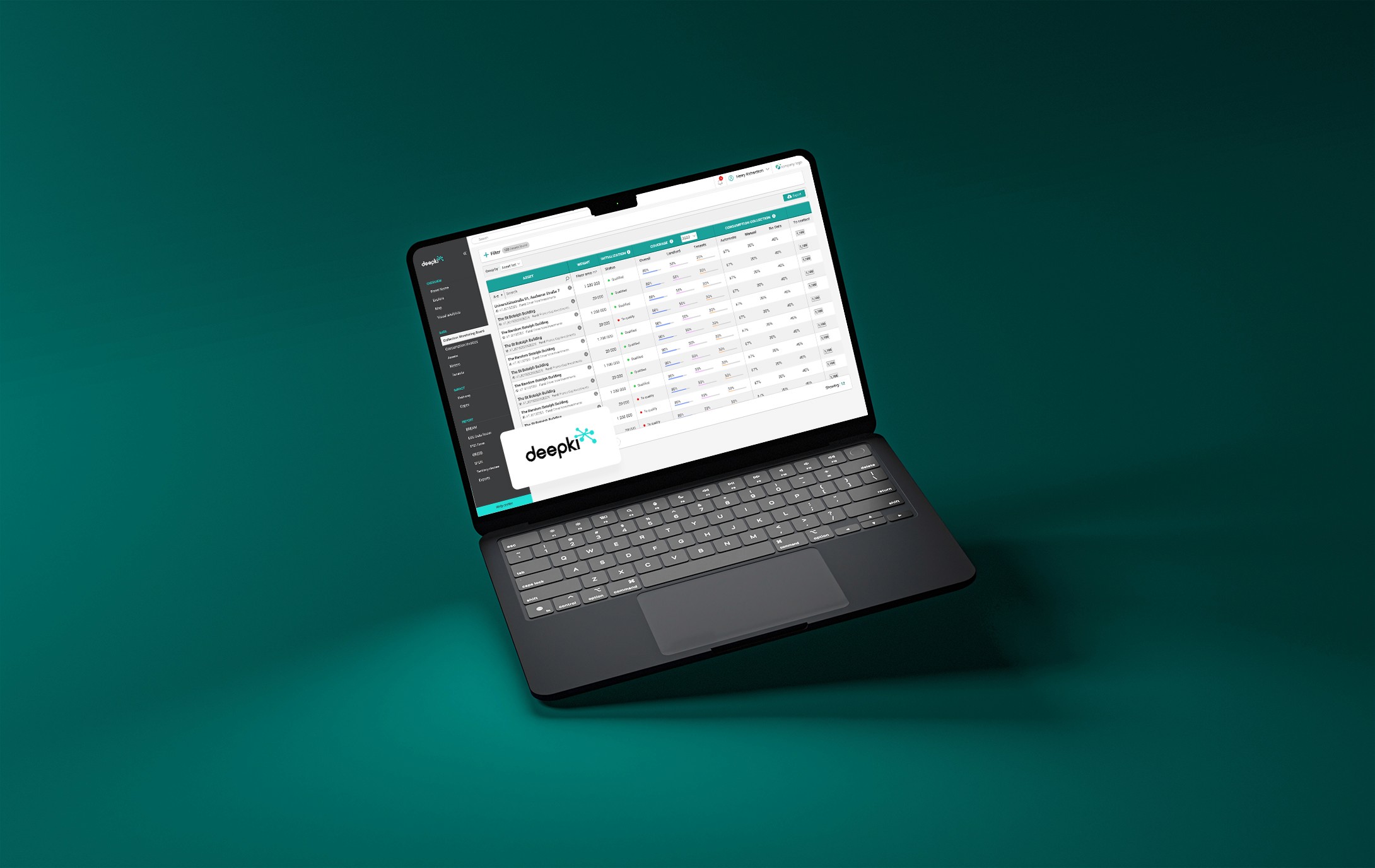
Images shown in this case study are of the MVP version, not of the current or even first version of Deepki's Supervision Board…
Introduction
Enhancing Deepki’s ESG analytics tool to support better decision-making
Deepki is a French company that offers an Environmental, Social, and Governance (ESG) data platform aimed at assisting commercial real estate investors, owners, and managers in enhancing the ESG performance of their assets. The company's mission is to help businesses optimize energy usage, reduce costs, and lower carbon emissions, thereby contributing to a more sustainable future.
The Challenge
Too much time and effort wasted trying to monitor the progression of data collection on real estate assets
Asset and ESG Managers, along with users responsible for data collection, faced challenges in monitoring the progression of data collection on buildings or real estate assets under their supervision.
At the time, these users had limited tools at their disposal and primarily relied on their Deepki support contacts to produce materials and reports related to data collection regularly. This not only frustrated users but also created constant strain on internal resources. This dependency highlighted the need for users to track the progress of data collection on their own.
Role & Team
Driving user-centred design decisions through research, prototyping, and testing
As one of two product designers, I led the end-to-end design of the Supervision Board, by collaborating closely with product managers, the Head of Product, the VP of Design, customer success engineers as well as the consulting and the engineering team to facilitate the monitoring of data collection on real estate portfolios.
MY APPROACH
Iterating quickly through research insights, focused design, and rapid validation
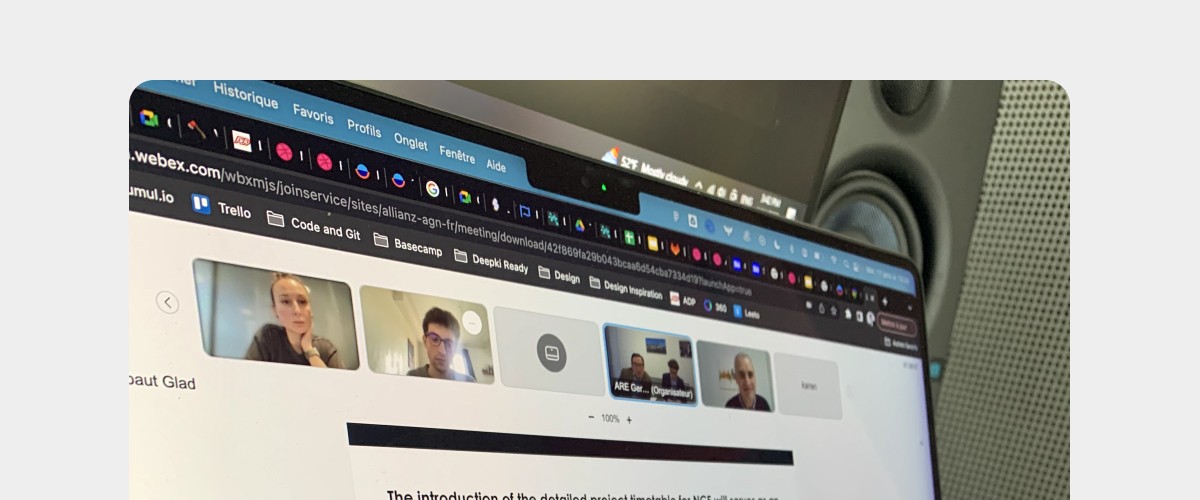
My approach was user-centered: I moved from initial research and stakeholder interviews straight into prototyping, then immediately validated assumptions through hands-on user testing sessions with actual property managers across multiple sessions.
Research & Discovery
Ideation
User Testing
Iteration & Implementation
Overcoming Obstacles
Strengthening Deepki’s immature design system
When I joined Deepki, the design system was still in its early stages and lacked the flexibility needed for complex interfaces. I therefore proposed and implemented improvements that served both for this project and future developments. I introduced new accessible colour variables, more than doubled the spacing scale for precise layouts, and created a set of global components such as; tooltips, tags, badges, and percentage progress bars that previously did not exist.
These enhancements ensured the Supervision Board remained perfectly consistent with the rest of the platform while establishing a more scalable foundation for everything that followed.
Solution
A more intuitive data table structure that helps users navigate, analyse, and act on ESG insights
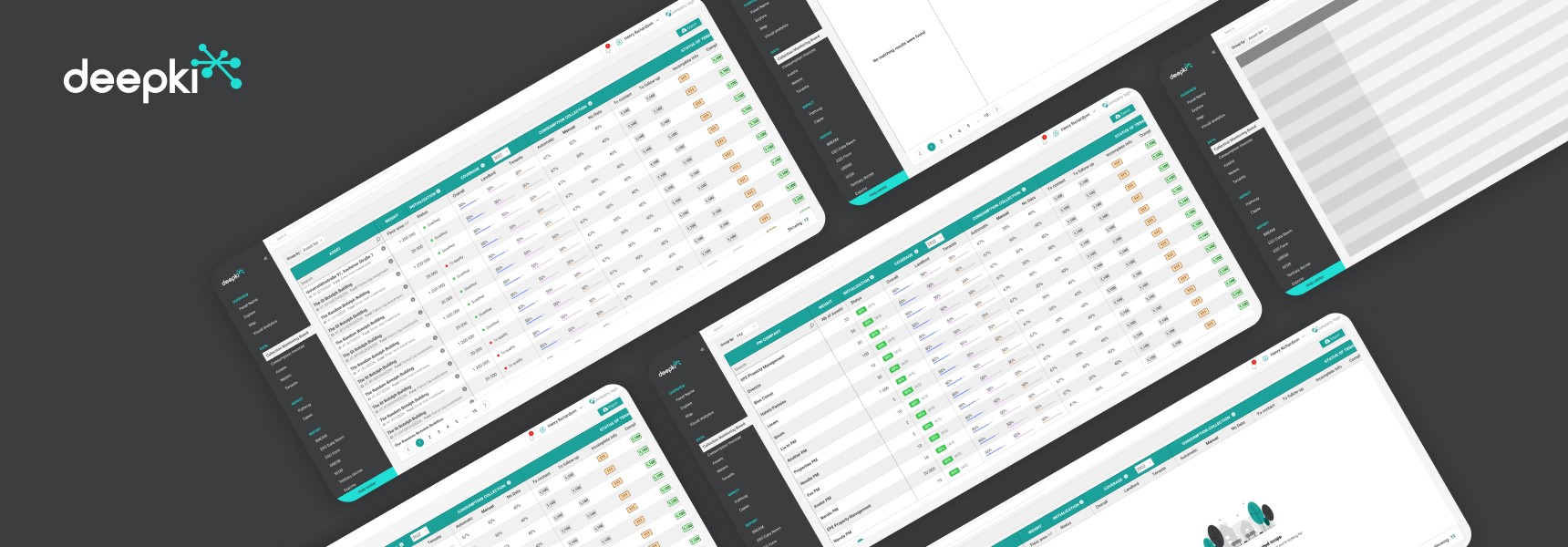
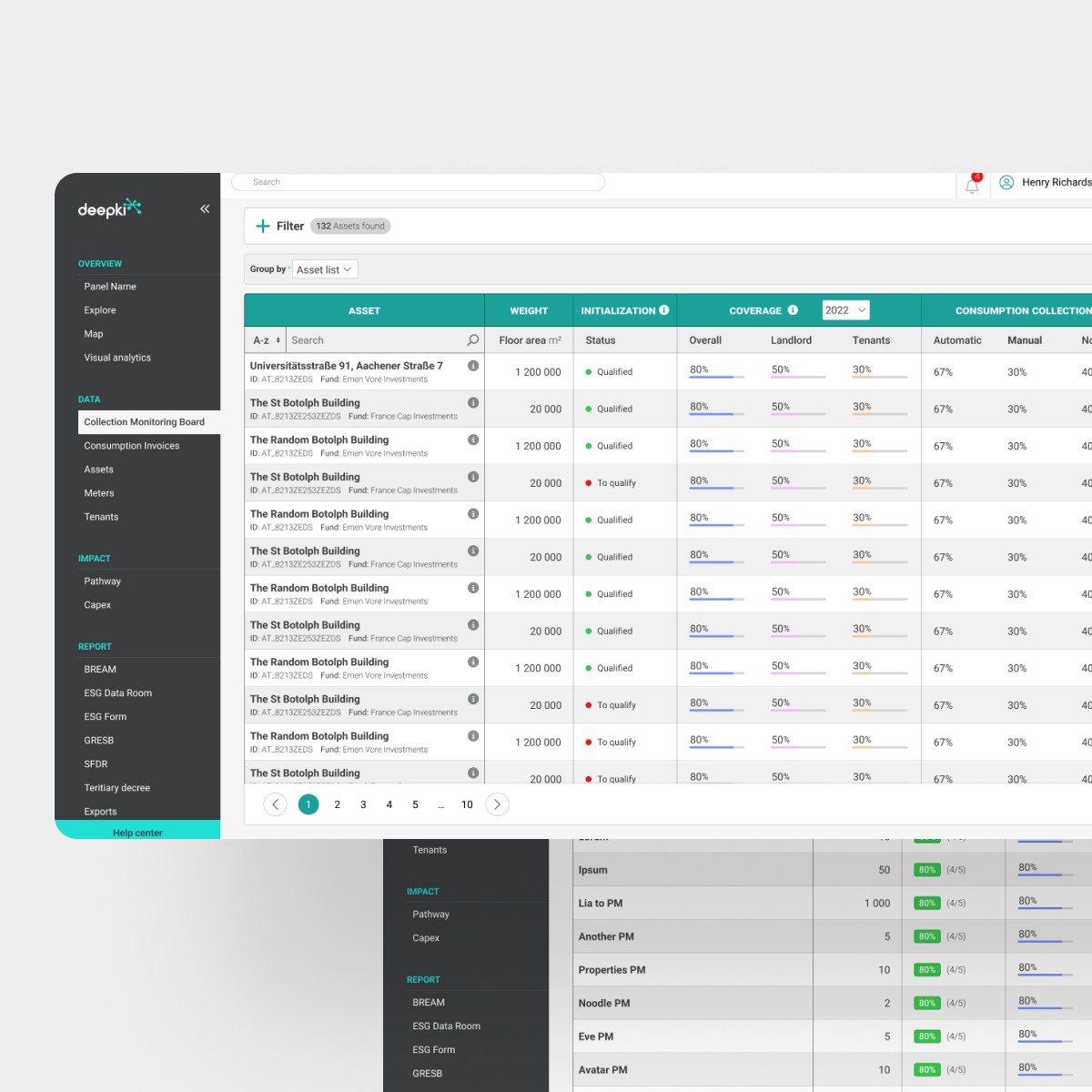
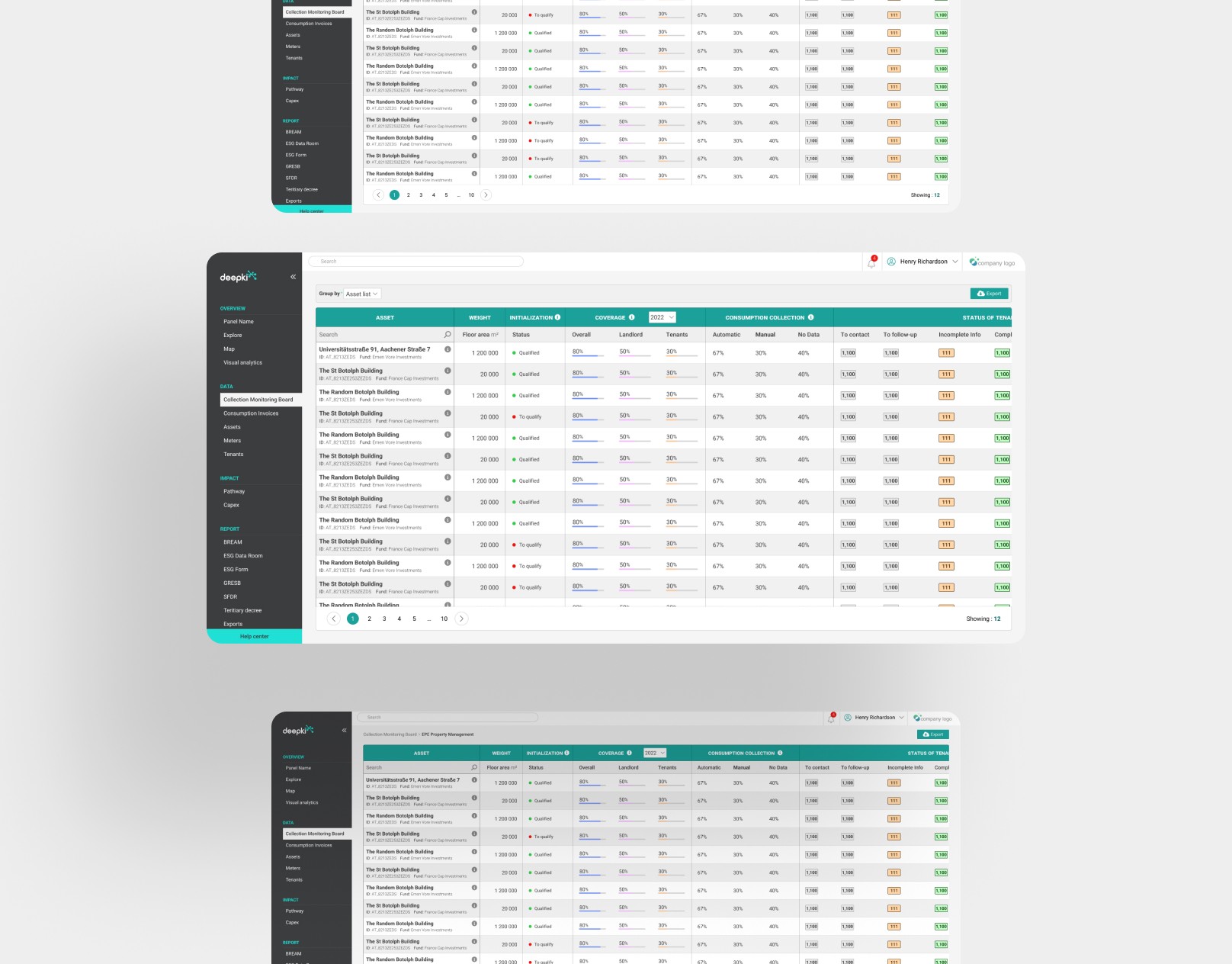
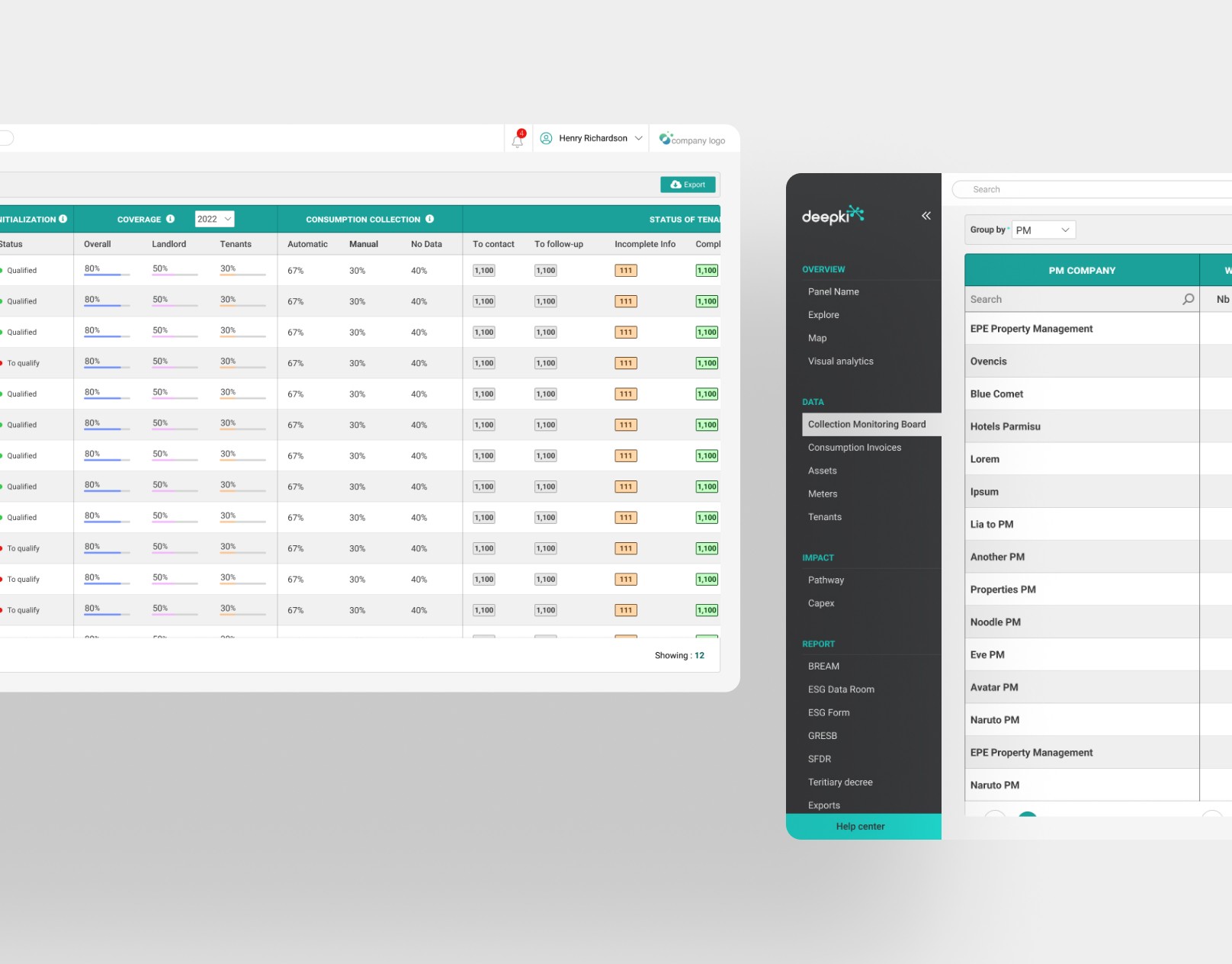
The result was a data table with three interconnected views:
Asset View: Lists assets with details like location, fund managers, qualification status, and floor area, supporting sorting and filtering for quick insights.
Stream View: Aggregates data by category, showing asset counts and qualification percentages for a macro perspective.
Stream Sub-Page View: Provides detailed data for selected groups via table row clicks, enabling deep dives.
Built on the enhanced design system, the feature offered intuitive navigation and robust functionality, empowering users to monitor and resolve issues independently.
Results
A product that lowered support requests by 15% while meeting user needs
The Supervision Board launched in Q2 2023 and immediately changed the way asset managers interacted with the platform. Feedback highlighted both clarity and practicality: “The table view is clear and excellent for exports,” and “We now have a holistic view of our assets, making data management practical.”
Internal customer success teams estimated a 15% reduction in support and contact inquiries, which directly translated into cost and savings as well as improved client satisfaction.
RELEFECTIONS
The critical role of User Testing in complex products
The biggest takeaway from this project was the importance of testing assumptions. The initial instinct to prioritize a visually appealing card layout gave way to a much more functional solution once we observed users working with real data. This validated the need to design for workflow efficiency, especially in enterprise contexts where scale is everything.
Another lesson was the value of investing in design systems early. By expanding Deepki’s system to accommodate data-heavy interfaces, I not only delivered this feature but also set the stage for future consistency and scalability across the platform.
If I were to revisit the project, I would explore a tab-based navigation model to simplify how users switch between views. This was an area of feedback that we could not address within the initial scope but would have improved usability further.