PASQAL - PULSER STUDIO
A no-code development platform for neutral atom quantum computing
Introduction
Making complex quantum workflows more accessible through thoughtful UX
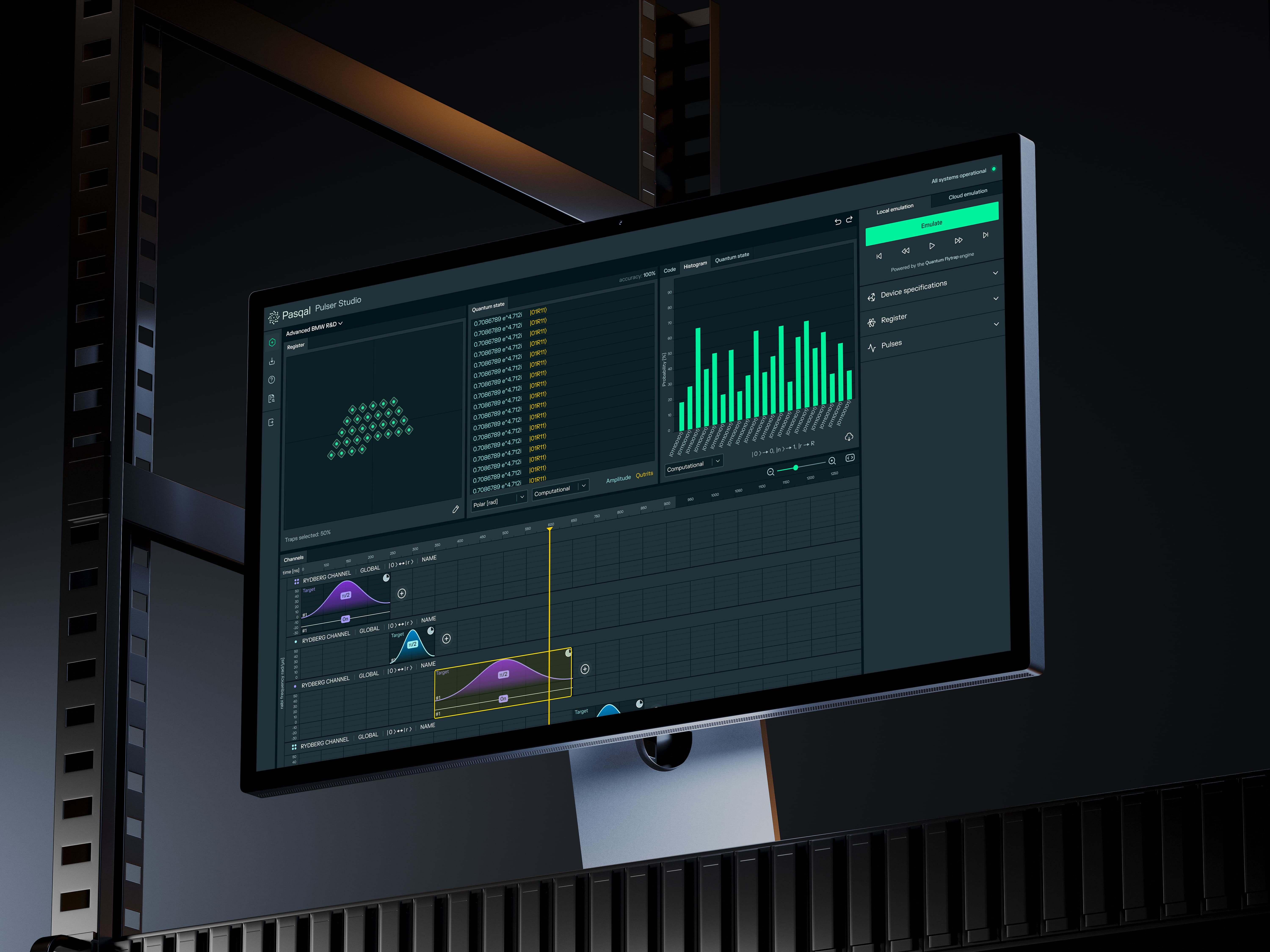
As the founding product designer at Pasqal, I led the redesign of Pulser Studio, a no-code platform that lets users create and run quantum experiments without deep coding knowledge. Over two quarters, I tackled usability issues and aligned the platform with Pasqal’s new branding, making quantum computing more accessible for novices and experts and strengthening its role as a teaching tool in quantum education.
The Challenge
Improving an existing product and translating technical quantum concepts into usable interfaces
Pulser Studio suffered from unclear navigation, inconsistent design elements, and the absence of a proper onboarding flow. Novice users didn’t know where to begin, and experienced users frequently hit limitations such as the inability to manage multiple experiments or export their work. The platform also lacked several features users had repeatedly requested in workshops. Beyond that, the UI no longer reflected Pasqal’s new branding. The challenge was to modernize the product all while balancing the needs of two very different user types.
Role & Team
Taking ownership of interface structure, component design, and user interviews
I led the end-to-end design process for the redesign of Pulser Studio.
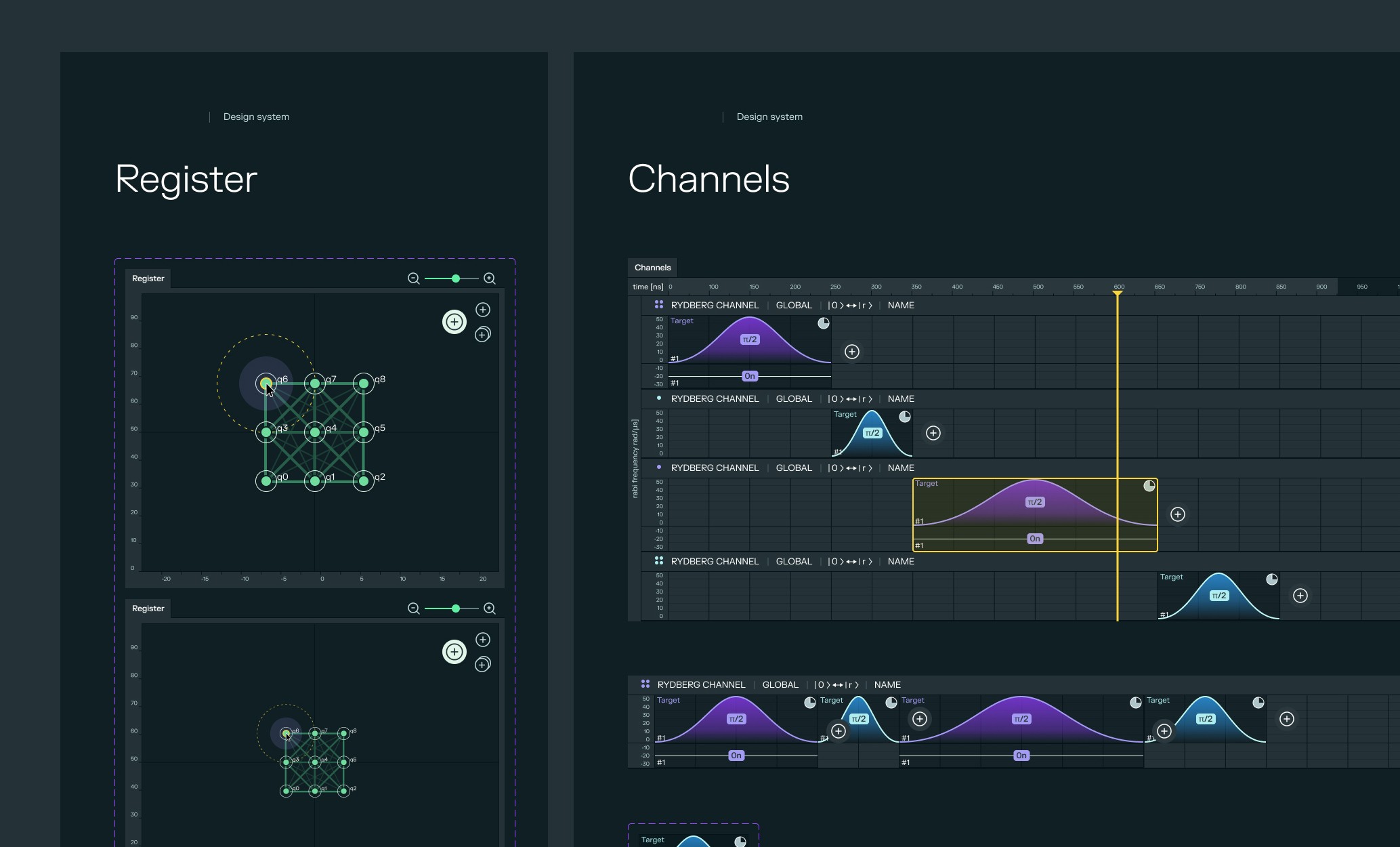
I worked closely with a freelance product designer, the engineering team, product manager, quantum developers, technical sales managers, and company VPs. My role involved running workshops, conducting user interviews, building a design system and ensuring designs were technically feasible.
MY APPROACH
Grounding the redesign in insights from workshops and user interviews
I started with a focused research phase combining UX audits, user interviews, and workshops to build a shared understanding of user pain points and technical constraints. From there, I moved quickly into design and iteration, validating decisions through regular reviews and supporting implementation with a dedicated, token-based design system.
Research
Design
Iteration
Implementation
Overcoming Obstacles
Uncovering deep technical pain points while rebuilding the interface from scratch
The original interface, built by a Ukrainian design agency, lacked a scalable design system, leading to inconsistent UI. I rebuilt every component from scratch, creating a local design system that integrated with Pasqal’s global framework, validated through engineering prototypes. Technical challenges, like cloud API integration, required prioritizing key features like experiment saving over immediate processor connectivity. Daily syncs with quantum developers ensured the UI handled complex data, while workshops helped balance novice and expert needs to maintain accessibility.
Solution
A clearer product that supports both learning and advanced usage
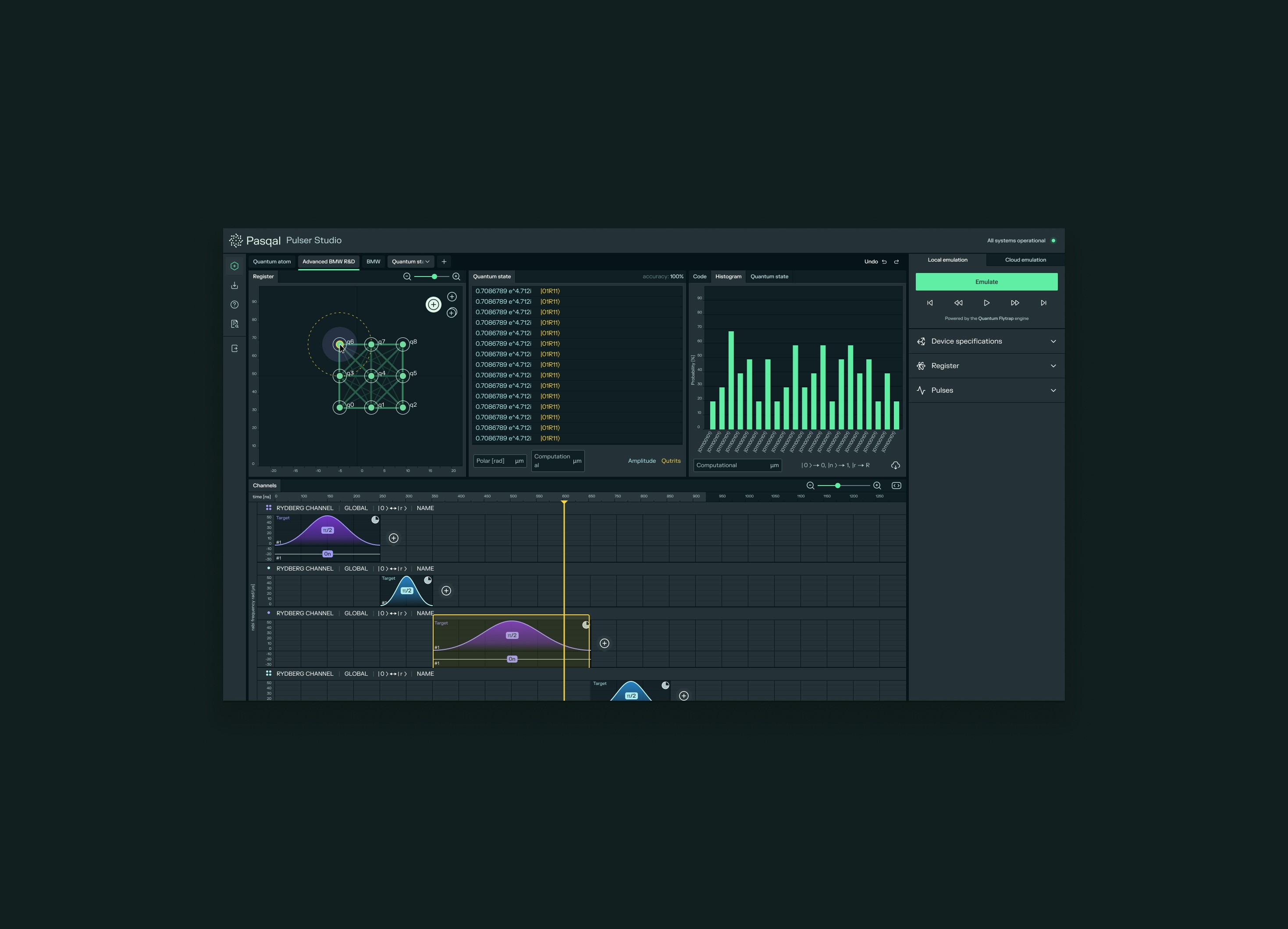
The redesigned Pulser Studio became a far clearer, more cohesive platform.
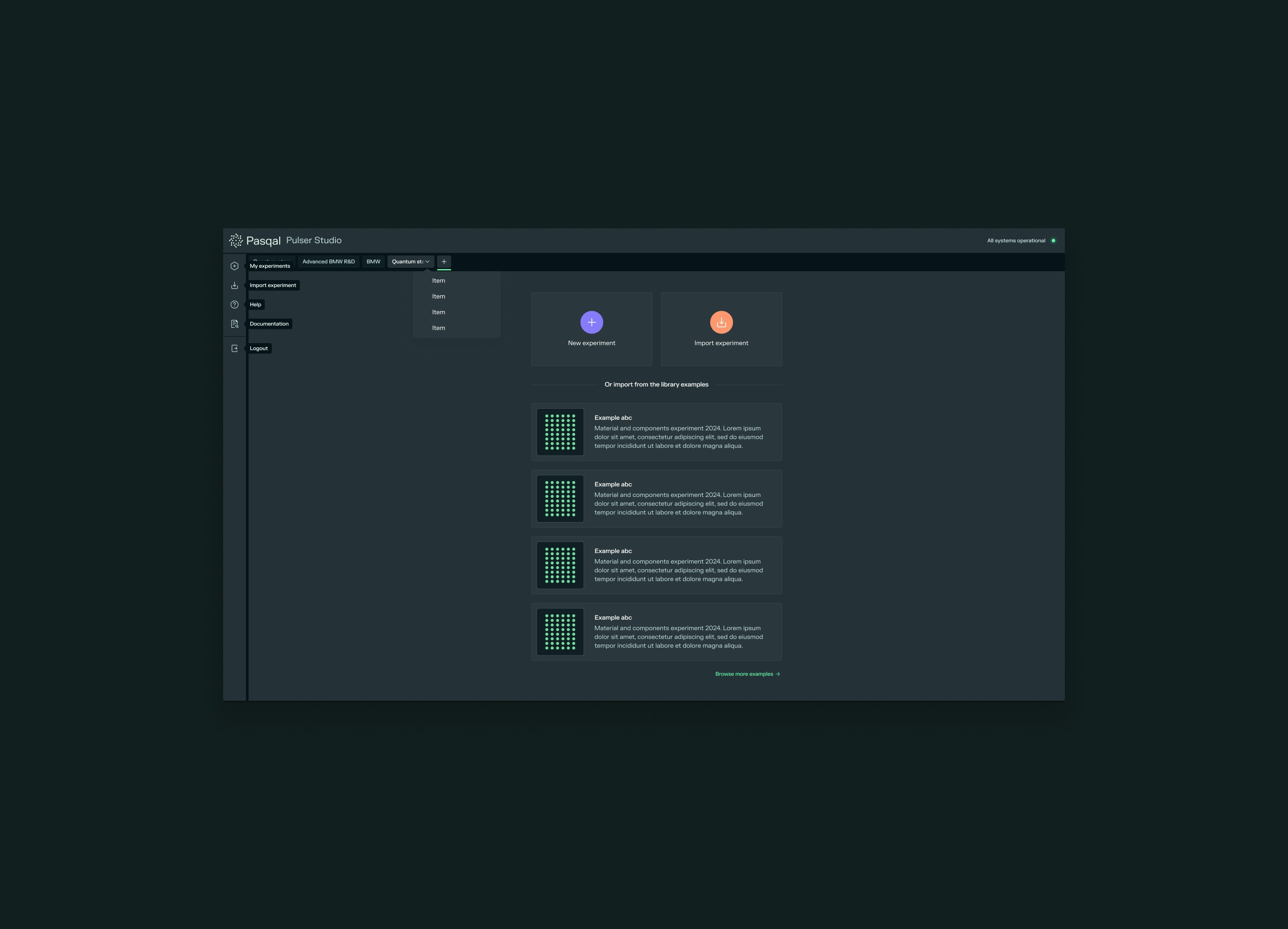
The navigation was simplified and reorganised so users could immediately understand where to start and how to progress. A new onboarding flow, complete with guided steps and contextual hints, helped newcomers reduce the initial friction that had previously kept many from moving beyond the first steps.
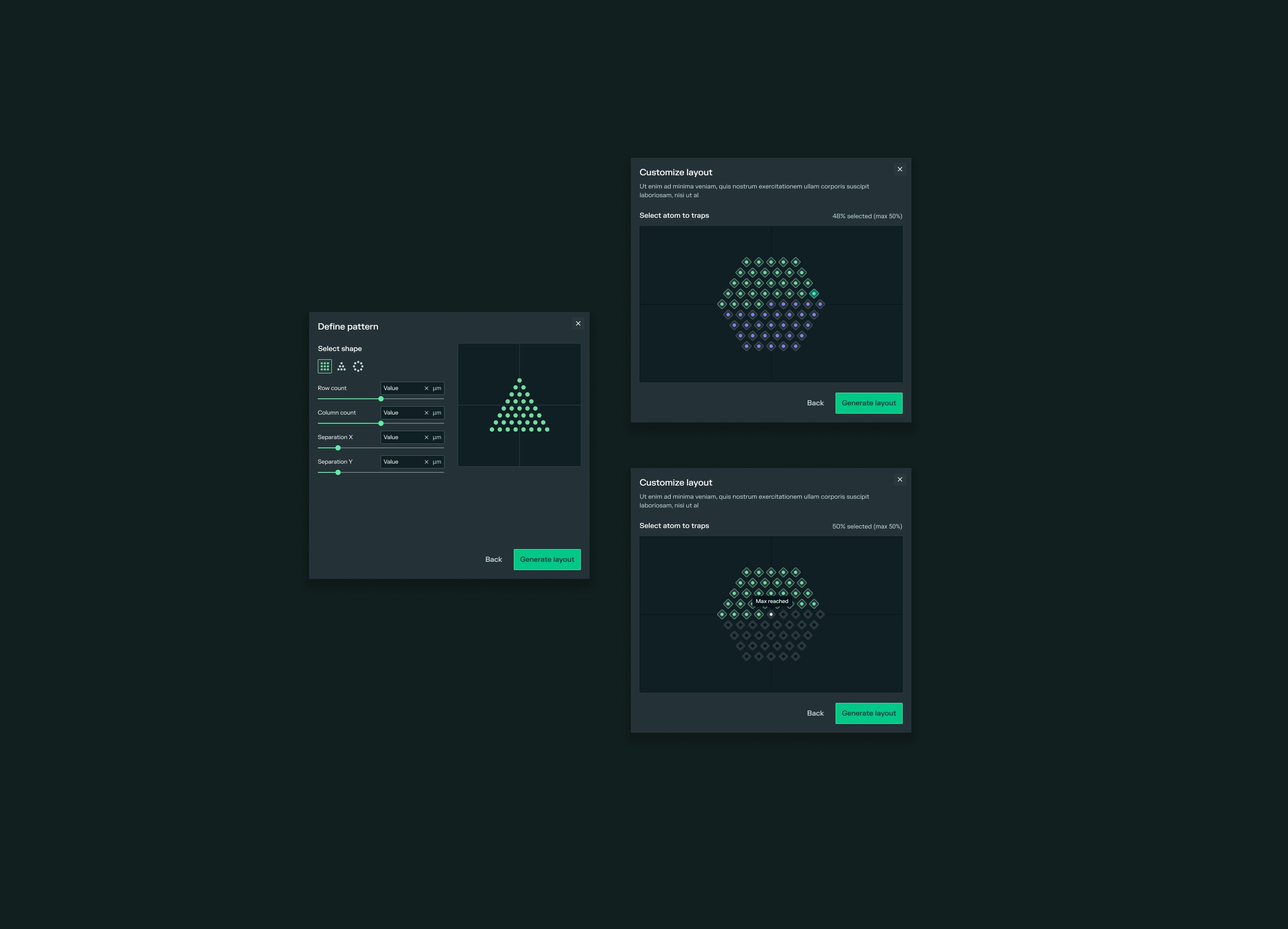
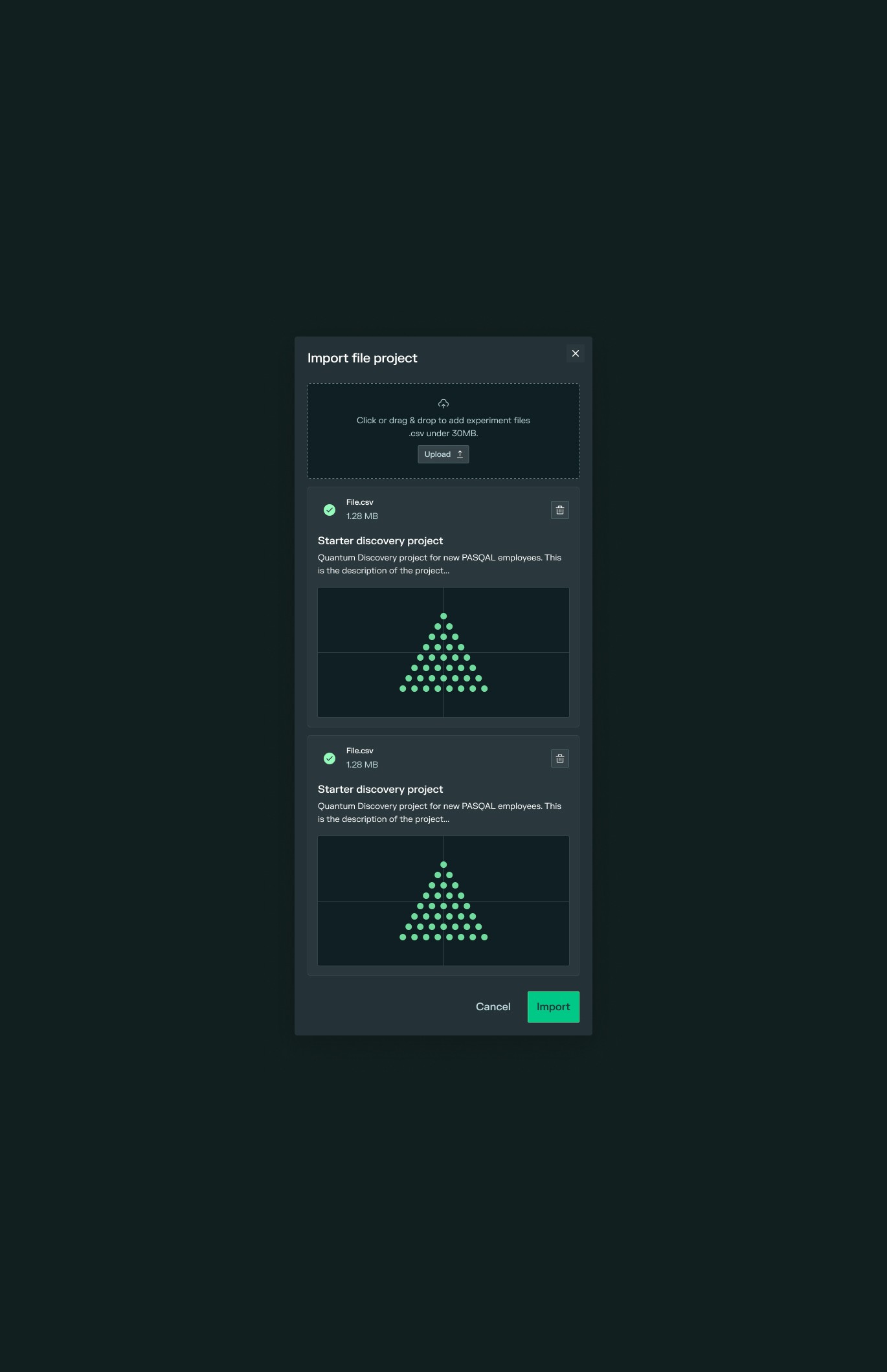
Users can now open, manage, and export multiple experiments — one of the most requested capabilities. The advanced settings were redesigned with clear hierarchy and progressive disclosure, making them usable even for users encountering quantum concepts for the first time. The register view received fine-tuned zoom controls for more precise manipulation, and the entire interface works seamlessly in both light and dark modes.
Accessing Pasqal’s cloud emulators is now integrated directly into the workflow, turning what used to be a hidden process into a straightforward part of the experience. Together, these changes transformed Pulser Studio into a tool that supports quantum education, research, and experimentation without overwhelming its users.
Results
Improved usability that strengthened Pulser Studio’s role in education and research
After the redesign, Pulser Studio became significantly more accessible, with notable adoption across universities and research groups. Both novice and expert users reported that the platform finally felt intuitive and aligned with their expectations. It is now used as a teaching tool in quantum courses, reinforcing its role as one of the few no-code interfaces capable of producing real quantum experiments. Users currently test sequences on emulators, and the product is now positioned for smoother integration with future quantum hardware.
RELEFECTIONS
Why early technical interviews are essential in highly specialized domains
This project showed me how critical it is to balance novice and expert needs in a niche field like quantum computing. Building a design system from scratch was key to keeping things consistent and speeding up iterations, something I now prioritize early in projects. Workshops and user testing taught me the value of clear onboarding for newcomers. If I redid this, I’d add more guided tutorials based on novice feedback about complex tasks. This experience sharpened my skills in managing complex collaborations and technical constraints.